Advice
Do You Pay Tax on Solar Panel Income? SEG, FiT and the Household Exemption

For a household whose solar is there to meet its own needs, the tax on solar panel income is usually nothing at all, but that isn’t automatic. Since the 2007-08 tax year, the law has exempted an individual’s income from selling electricity generated at or near a home they occupy, as long as the system isn’t meant to generate significantly more than the home uses. Businesses and farms are treated differently. This guide sets out what the law says about selling the electricity you generate, what HMRC’s own guidance says about Feed-in Tariff (FiT) payments and VAT, and where Smart Export Guarantee (SEG) payments fit.
It’s general information, not tax advice. We’re solar installers, not accountants, so for your own position ask HMRC or a qualified tax adviser.
What section 782A actually says
The household exemption is section 782A of the Income Tax (Trading and Other Income) Act 2005, added by the Finance Act 2007 for the 2007-08 tax year onwards. It says no liability to Income Tax arises on income an individual gets from the sale of electricity generated by a microgeneration system if both of these are true:
-
The system is installed at or near domestic premises the individual occupies.
-
The individual intends that the electricity it generates will not significantly exceed the electricity consumed in those premises.
“Domestic premises” means premises used wholly or mainly as a separate private dwelling. A “microgeneration system” takes its meaning from the Energy Act 2004, via the Taxation of Chargeable Gains Act 1992: it relies wholly or mainly on listed sources of energy or technologies, including photovoltaics, and its generating capacity is no more than 50 kilowatts. Legislation.gov.uk shows the section up to date with all changes known to be in force on or before 2 November 2026.
How HMRC reads “significantly exceed”
The law doesn’t define “significantly exceed”. HMRC’s Business Income Manual says it “should be considered by reference to the particular circumstances”, then gives a working guide: “in general, a householder who does not intend to generate an amount of electricity more than 20% in excess of their own domestic needs is unlikely to be regarded as intending to significantly exceed the amount of electricity consumed in their own premises.”
Two points come straight from HMRC’s wording:
-
The test is about what you intend the system to generate, measured against what your home consumes.
-
It isn’t limited to your main home. HMRC says the exemption may apply at another property, provided you use it wholly or mainly as a separate private dwelling and the other conditions are met.
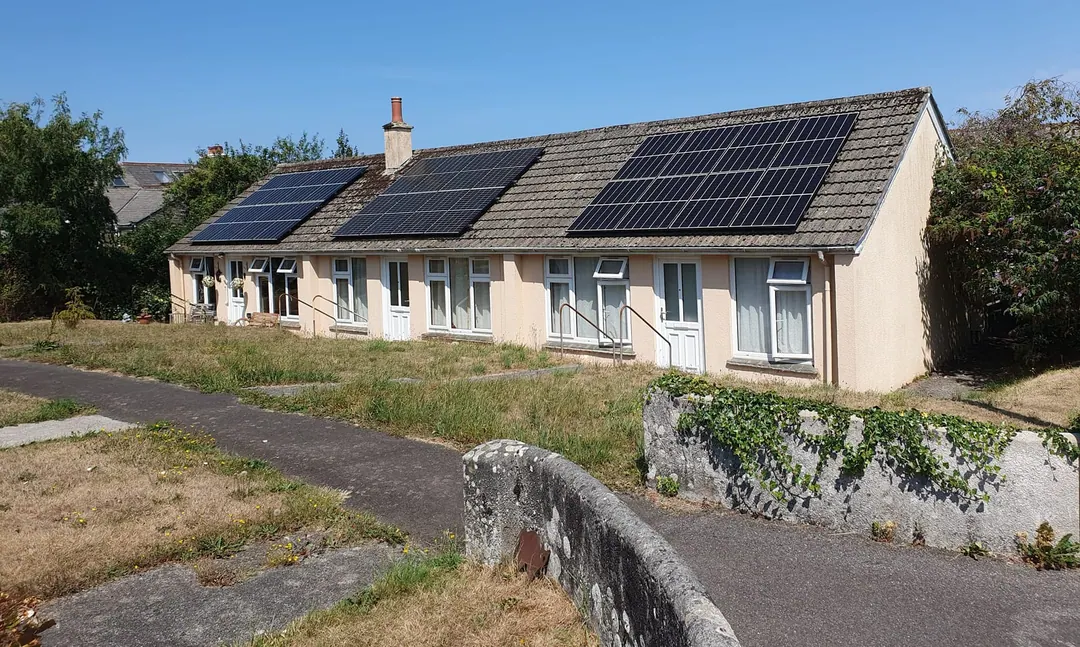
Tax on solar panel income from the SEG
The SEG launched on 1 January 2020. Ofgem says it requires electricity suppliers to pay small-scale generators for low-carbon electricity they export to the National Grid, and gov.uk puts it simply: you’re paid for every unit you feed back, and not for any you use yourself. To get a SEG tariff, your installation and installer must be certified through MCS or a scheme accredited as equivalent.
Section 782A doesn’t name any scheme. It covers income from the sale of electricity generated by a microgeneration system, and gov.uk’s own SEG page talks about what you could earn “selling unused energy back”. HMRC’s manual pages on the exemption speak of Feed-in Tariff payments and don’t mention the SEG by name.
Gov.uk notes that a household battery able to import and export electricity could also be used to benefit from the SEG. Section 782A, though, is about electricity generated by the microgeneration system. If you charge a battery from the grid and export some of that electricity, it didn’t come from your panels, so ask HMRC or your adviser how that part of your income is treated. If you’re weighing up a battery to store more of your own solar, we size it to how you use electricity.
Feed-in Tariff payments: generation and export
The FiT closed to new applications from 1 April 2019, but installations already accredited are still paid for their eligibility period. It has two parts, and HMRC treats them differently:
| FiT payment | Paid for | HMRC’s position for an individual, outside a business |
|---|---|---|
| Generation tariff | Electricity your system generates | No Income Tax liability if it isn’t chargeable as miscellaneous income, which HMRC says will usually be the case where you generate mainly for your own home |
| Export tariff | Electricity exported to the wider energy market | Generally chargeable as miscellaneous income, unless the section 782A exemption applies |
HMRC’s conclusion: “No income tax will therefore arise on feed-in tariffs received by an individual from domestic microgeneration where the above conditions are met.” It adds that a miscellaneous income charge may arise if the person receiving the generation tariff “is providing a form of service or facility in connection with the electricity being generated”.
Our guide to the Feed-in Tariff for existing owners covers rates, meter readings and moving house.
When the household exemption may not fit
Going by the law and HMRC’s guidance, look again if:
-
The system was meant to generate significantly more electricity than your home consumes.
-
A limited company receives the income, rather than an individual.
-
The panels are at premises that aren’t used wholly or mainly as a separate private dwelling.
-
The income is received in a business capacity.
-
Your panels came on a rent-a-roof lease. HMRC’s VAT manual describes arrangements in which the right to the generation and export tariff income is vested in the installing company, which receives it.
If anyone has offered you “free” panels on those terms, read our guide to spotting solar panel scams before you sign.
Outside a business, HMRC says FiT export payments that aren’t exempt are generally miscellaneous income. The government’s Budget 2026 document, published on 28 October 2026, says the government will triple the trading allowance from 6 April 2027, through Finance Bill 2026-27, allowing individuals to receive a larger amount of trading and miscellaneous income tax-free each year. Gov.uk adds that you may need to send a Self Assessment tax return if you have untaxed income, and that you must send one if HMRC asks you to. Not sure you can use the trading allowance? Ask HMRC’s Income Tax helpline.
Talk to us about sizing your system
Businesses: HMRC’s normal principles
For a business, HMRC’s Business Income Manual says the tax treatment of the FiT generation tariff “will depend on the nature of the receipt in the hands of the recipient”. In general, where it’s received in a business capacity, “it will be a business receipt on normal principles”. The same goes for the export tariff: where a person receives it in a business capacity, “the tariff will be a business receipt on normal principles”.
Section 782A only covers income arising to an individual, so it has nothing to offer a limited company. HMRC makes these points about the FiT, so ask your accountant how SEG income and the cost of the equipment fit your accounts. If you’re looking at the roof of your own premises, our page on solar for business premises explains how we plan systems around your operating hours.
Farms with the farmhouse on the same site
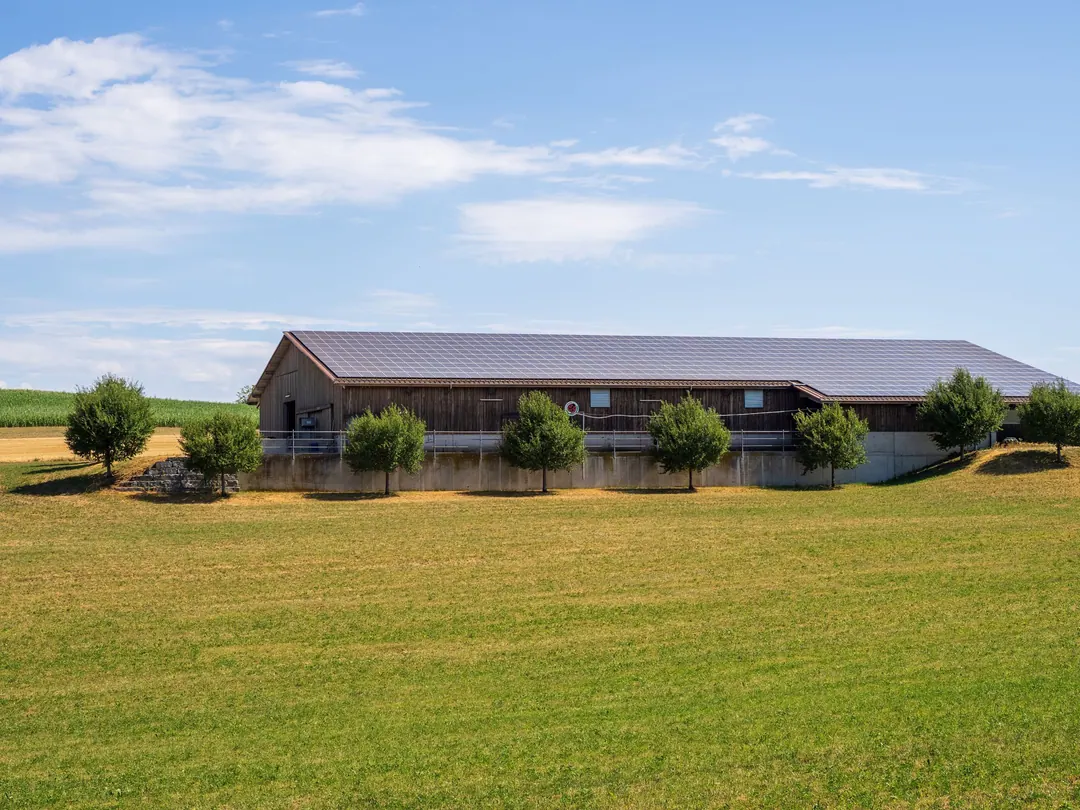
If you farm and live on the farm, read HMRC’s paragraph on premises used for both private and business purposes: “Where an individual occupies premises for both private and business purposes a generation tariff received in a business capacity will be a business receipt on normal principles. A generation tariff received in a private capacity, which is not chargeable as miscellaneous income, will not be liable to Income Tax but the reduced cost of electricity should be reflected in the cost of electricity attributed to business use.”
So settle the split between farmhouse and farm business with your accountant before the system goes in. We design solar panels for farms around the farm’s daytime load, from the milking parlour to the farmhouse.
VAT: fitting panels and selling electricity
VAT comes up in two places, fitting and exporting:
| Question | HMRC says |
|---|---|
| Fitting solar panels to a home | Zero-rated until 31 March 2027, then the reduced rate of 5% from 1 April 2027 (VAT Notice 708/6) |
| Fitting a battery to a home | Zero-rated from 1 February 2024 to 31 March 2027, including a battery retrofitted to existing solar |
| FiT generation payments | Outside the scope of VAT, as they’re not consideration for any supply |
| FiT export payments | VAT is due on the electricity supplied where a taxable person acting as such makes the supplies in the course of business |
For a VAT-registered farm or business, HMRC’s VAT manual, in its Feed-in Tariff pages, says it is “generally content that the activity of producing electricity to sell back to the grid can be a business activity”, and any associated input tax is deductible, subject to the normal rules. The battery zero rate covers retrofitting too, so it applies at home when we add a battery to the panels you already have.
Paperwork worth keeping
The household test turns on what you intend the system to generate, so keep the papers that show how it was sized and what it earns:
-
The design and quote. Our quote sets out the design and its estimated savings, based on your use.
-
Your MCS certificate. Suppliers paying export payments under the SEG ask for proof of certification.
-
Your SEG or FiT statements, and the meter readings behind them.
-
Your electricity bills, which show what the home consumes.
Sizing solar to your home
We design every system around your household’s daily pattern of electricity use. The aim is what makes sense for your home, not the maximum amount of equipment, and our page on solar panel installation for your home shows how we work. We can’t tell you how your income will be taxed, but the design figures are yours to show your adviser. We work with homes in and around Launceston, the nearest sizeable town to our base at Lewdown, and right across Devon and Cornwall.
Tax on solar panel income: a checklist
-
Check both conditions in section 782A: a system at or near the home you occupy, and no intention to generate significantly more than the home consumes.
-
Treat FiT generation payments, FiT export payments and SEG payments as separate questions.
-
If a company or a business receives the income, start from HMRC’s business receipt wording, not the household exemption.
-
Keep the design, the quote, your statements and your bills.
Work through those, and you’ll know whether your solar panel income is a tax question at all, or one to take to HMRC or a qualified adviser.