Aftercare
The Feed-in Tariff for Existing Owners: Payments, Rates, Moving House and When It Ends
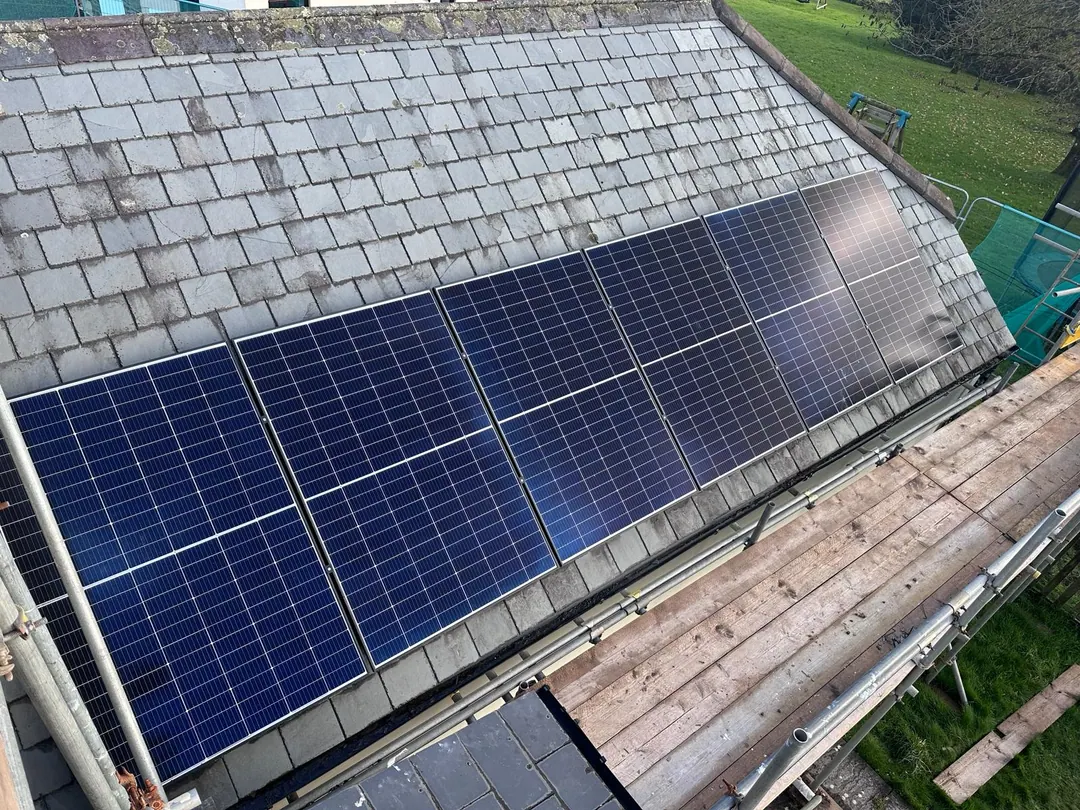
If your solar panels went up between April 2010 and March 2019, they may well be on the Feed-in Tariff (FiT). The scheme closed to new applicants from 1 April 2019, but payments carry on for existing owners until each system’s eligibility period ends. This guide covers what you’re paid for, how rates move each April, meter readings, moving house, changes to your system and what happens when payments stop. Ofgem, the energy regulator, keeps the scheme’s register, so its guidance is our main source.
How Feed-in Tariff payments work
Your FIT licensee, the electricity supplier your system is registered with, pays you at least quarterly, based on the meter readings you send. Your agreement, the statement of FIT terms, is with that supplier, not with the government.
| Payment | Based on | Good to know |
|---|---|---|
| Generation | Your generation meter readings | Actual readings only, never estimates |
| Export, deemed | 50% of your generation | Systems of 30 kW or less with no export meter, for 2026 to 2027 |
| Export, metered | An export or smart meter | Replaces deemed export once a suitable meter measures it |
Ofgem says a smart meter ends deemed export payments: you’re paid instead for the export it records, and your generation payments aren’t affected.
Feed-in Tariff rates and the April adjustment
Your rate was set when your system joined. It depends on the technology, the system’s total installed capacity and the tariff period its eligibility date fell into. For solar PV accredited after April 2012, the Energy Performance Certificate (EPC) matters too: without an EPC of D or above issued before commissioning, a system gets the lowest of three rates.
The government sets the rates and Ofgem publishes them. Each FIT year runs from 1 April to 31 March, and rates are adjusted for inflation at the start of it. Until the end of FIT Year 16, on 31 March 2026, that meant the Retail Price Index (RPI). After a consultation, the government switched to the Consumer Price Index (CPI) from FIT Year 17, which began on 1 April 2026.
| Rates from | Index | Adjustment |
|---|---|---|
| 1 April 2025 | RPI | 3.5% |
| 1 April 2026 | CPI | 3.4% |
To find your rate, open the current tariff table on Ofgem’s tariffs and payments page. You’ll need your eligibility date, your system’s technology and capacity and, for solar PV from April 2012 on, whether it got the higher, middle or lower rate. Next year’s rates are due by 1 February 2027.
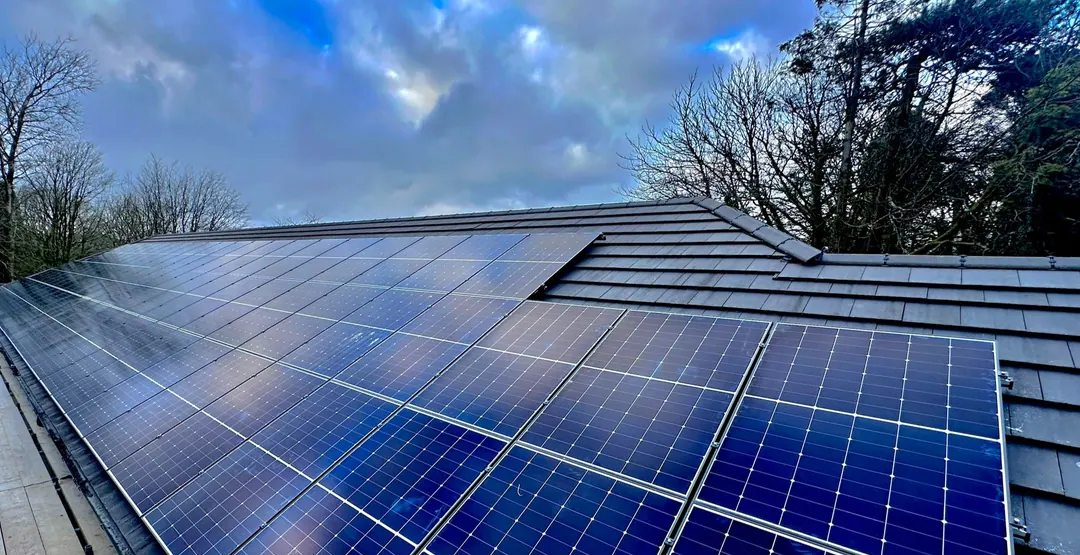
Meter readings: what your supplier needs
Ofgem makes you responsible for providing meter readings, and your supplier should tell you how often it needs them. It must also check your readings at least once every two years, and since 31 August 2021 it can do that with photos you send instead of a visit.
-
Read the generation meter on about the same date each time, and photograph it with the date showing.
-
Keep a log. You’ll want it if a reading is queried or your supplier fails.
-
Compare each reading with the same period last year. A big drop in similar weather can be a sign of a fault.
-
Tell your supplier if a meter is replaced or removed.
The inverter is the part of a system most likely to fail, but never open it or touch the wiring: fault-finding is a job for a qualified electrician. If the numbers look wrong, our solar panel repair and fault finding service finds the cause, on systems we fitted and ones we didn’t.
How long the payments last
The eligibility period starts on your eligibility date, which is set by when the system was commissioned and when its application was made. For most installations, Ofgem says, it’s 20 years. For solar PV:
| Your solar PV system | When FiT payments end |
|---|---|
| A micro-generator commissioned before 15 July 2009 and transferred from the Renewables Obligation | 31 March 2027 |
| A micro-generator commissioned from 15 July 2009 to 31 March 2010 | 31 March 2035 |
| A small generator commissioned in the same period | 30 September 2034 |
| Any other system with an eligibility date before 1 August 2012 | 25 years after the eligibility date |
| Eligibility date on or after 1 August 2012 | 20 years after the eligibility date |
If your panels are in the first group, payments end in March 2027, so sort out export payments now. On these rules, every other solar PV system’s FiT runs until at least the end of July 2032. Ofgem recommends that suppliers contact owners before the end date, but don’t wait: ask yours for the date. Ofgem’s report for April to June 2026 shows that the 537 installations to reach the end of their support so far are all micro combined heat and power units, which get 10 years.
After the FiT: export payments under the SEG
The Smart Export Guarantee (SEG) pays for the electricity you export. It started on 1 January 2020, and Ofgem says installations eligible for the FiT qualify too, given an export or smart meter that takes half-hourly readings. The government adds that the installation and installer must be certified through the Microgeneration Certification Scheme (MCS) or an equivalent, which your MCS certificate shows.
-
Each SEG supplier sets its own rate and terms, but the rate must be above zero.
-
Your SEG supplier needn’t be the company that sells you electricity.
-
You can’t be paid FiT export and SEG payments for the same electricity.
You needn’t wait for the FiT to end. Opt out of FiT export payments through your FiT supplier and your generation payments carry on. Ofgem’s guidance lets you change that choice once every 12 months at most, so get the figures from both first. Our guide to what solar PV is and how export payments work explains the SEG further.
Moving house with Feed-in Tariff panels
The FiT follows the installation, so when the house is sold, the right to the payments passes to the panels’ new owner. Ofgem’s guidance for FiT generators and its rules for suppliers split the job:
- Selling: tell your FiT supplier as soon as you reasonably can.
- Buying: give the supplier the panels are registered with evidence of the change in ownership, and it updates the Central FIT Register. Ofgem can tell you whether panels are on the scheme, and with which supplier.
- Either way: the tariff rate and the eligibility period don’t change.

Pass on, or ask for, the MCS certificate, the statement of FIT terms, recent statements, the latest readings (a dated photo from completion day helps) and any warranties. Lost the MCS certificate? Ask the original installer first. If that installer is no longer MCS certified or no longer trading, the MCS helpdesk can provide a copy to the current owner, with proof of address and an admin fee.
Changing your system without risking payments
Tell your FiT supplier about changes, which Ofgem says include:
- adding or removing panels, or replacing them with a larger or smaller total capacity;
- replacing or removing a generation or export meter;
- connecting battery storage;
- any other change to the installation.
You can repair or replace equipment without affecting accreditation, as long as the installation keeps to the scheme rules, such as staying the same technology and not being decommissioned or moved. Remove all of the plant up to the grid connection, though, and Ofgem treats the installation as decommissioned. Extra panels earn no FiT unless the extension was commissioned before 15 January 2016.
A battery won’t affect your payments, Ofgem says, as long as your generation, and your export if it’s metered, can still be measured accurately. Your supplier will want a single line diagram of the system, battery and meters, and for storage of 50 kW or less Ofgem recommends an MCS installer working to the MCS Battery Standard. We add a battery to the solar panels you already have, including systems we didn’t fit.
-
If you withdraw from the scheme and come off the register, Ofgem says you can’t rejoin.
-
If someone pitches an upgrade for your older system, read our guide to spotting solar panel scams before you sign anything.
Switching supplier, or losing one
To move your FiT to another licensee, ask the new one: it contacts your current supplier, and you agree new terms and give up-to-date readings. Ofgem says a switch usually takes around 4 to 5 weeks. If your supplier goes out of business, payments don’t move automatically, and they pause until you agree terms with another licensee. Ofgem can direct suppliers to make up missed payments, but you’ll need a record of the last readings you were paid for. Your log has them.
FiT panels around Plymouth and the South West
The FiT took off here. Ofgem’s report for April to June 2026 puts the biggest share of the scheme’s installed capacity in the South West: 17.85%, or 1.16 GW. Its installation report to 30 June 2026 lists 6,224 solar PV installations in Plymouth, 6,090 of them domestic, and the PL5 and PL6 postcode districts have the most. More than nine in ten date from 2011 to 2015:
| Commissioned | Plymouth’s FiT solar PV installations |
|---|---|
| 2010 or earlier | 63 |
| 2011 to 2012 | 1,963 |
| 2013 to 2015 | 3,782 |
| 2016 to 2019 | 416 |
So thousands of the city’s FiT systems are now more than a decade old. We look after solar at homes around Plymouth and across Devon and Cornwall, whoever fitted it.
Keeping an older FiT system earning
Generation payments follow generation, so a system that’s quietly producing less pays you less. Our Annual Solar Health Check is a one-hour visit in which our own team tests and inspects your system, from panel output to the inverter, whoever installed it. On its own it costs £395, and our page on solar panel maintenance explains what it covers.
Members of The Solar Owners Club get that check every year, plus a dedicated support line, discounted upgrade products and fixed, discounted labour rates. A year comes with every installation we carry out, and owners of systems we didn’t fit can ask about joining. On upgrades, the club’s promise is plain: we won’t negatively affect your Feed-in Tariff income or your export payments under the SEG.
Your Feed-in Tariff checklist
-
Keep the statement of FIT terms and the MCS certificate together.
-
Send readings on time, and keep dated photos and a log.
-
Ask your supplier for your end date and put it in the diary.
-
Tell your supplier before any change: a battery, a new inverter, a meter or more panels.
-
Look at the SEG before your FiT ends.
Do those, and you’ll help your Feed-in Tariff pay at the right rate for as long as your system is entitled to it.