Guide
Do Solar Panels Work in Winter? What They Make in Devon, Month by Month
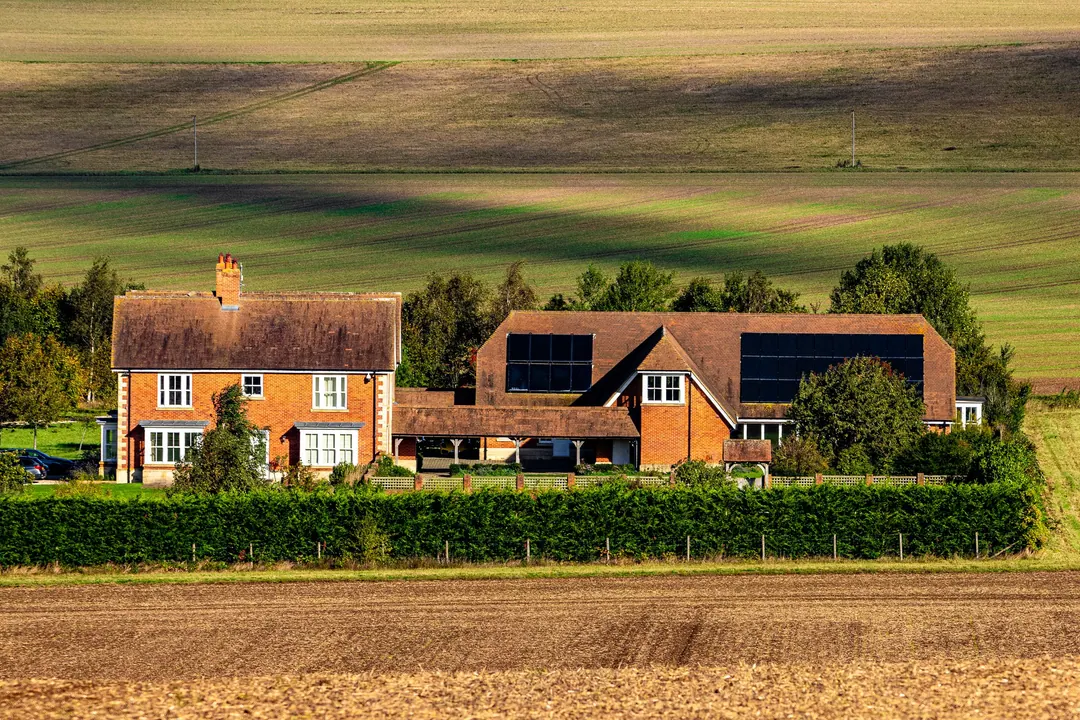
Yes, solar panels work in winter. They make electricity from daylight, not from heat, so they keep generating from November to February, just less than they do in summer. The question worth asking is how much less, and what that means for a home in Devon. We fit solar panels and batteries from our base near Okehampton, so we ran the figures for here.
Why solar panels still work in winter
A solar panel turns light into electricity. Warmth plays no part in it, so a bright, cold January morning can be a good morning for your panels. Our guide to what solar PV is explains how the cells work and what kWp means.
What changes in winter is the amount of light. The days are shorter, the sun sits lower in the sky, and in Devon there’s often more cloud. All three cut the energy reaching the panels, so output falls. It doesn’t stop.
How cold weather affects solar panels
Cold on its own helps rather than hurts. LONGi’s panel manual notes that a panel’s voltage and power rise in low temperatures. On a hot summer afternoon a panel runs less efficiently than it would on a cool, clear day with the same sunshine.
Frost and ice don’t harm the panels either. They’re built to sit outside all year, and a light frost on the glass clears as the sun comes up. Leave it to melt rather than scraping or pouring water on it.
What a 4kWp system makes each month near Okehampton
We ran PVGIS, the EU Joint Research Centre’s solar model, for a 4kWp system near Okehampton, facing south at 35° with 14% system losses. These are long-term averages from satellite data, not a forecast for your roof.
| Month | Generation in the month | Average a day |
|---|---|---|
| October | 241 kWh | 7.8 kWh |
| November | 170 kWh | 5.7 kWh |
| December | 125 kWh | 4.0 kWh |
| January | 141 kWh | 4.5 kWh |
| February | 201 kWh | 7.2 kWh |
| March | 353 kWh | 11.4 kWh |
| June | 471 kWh | 15.7 kWh |
| Whole year | 3,913 kWh | 10.7 kWh |
December is the lowest month, at about a quarter of June’s output. November to February together make about 637 kWh, roughly 16% of the year. By March, output is back above 350 kWh a month.
Exeter and the coast: a little more winter sun
Height and distance from the moors make a difference. The same 4kWp system near Exeter, closer to sea level, models at about 4,239 kWh a year in PVGIS.
| Month | Near Okehampton | Near Exeter |
|---|---|---|
| November | 170 kWh | 193 kWh |
| December | 125 kWh | 144 kWh |
| January | 141 kWh | 167 kWh |
| February | 201 kWh | 234 kWh |
Near Exeter, December’s output is about 15% higher than near Okehampton. Your own figure depends more on your roof than your postcode: its direction, its pitch and anything that shades it in the low winter sun. Our page on solar panels in Exeter covers the city in more detail.
Short days and low sun: the real winter limits
In December the sun is up for only about eight hours in Devon, and it never climbs high. Low sun meets the panels at a shallower angle and has more atmosphere to travel through, so less energy arrives.
Low sun also casts long shadows. A chimney, a tree or a neighbour’s roof that doesn’t touch your panels in June can shade part of the array in December. That’s why we look at shading through the whole year at a survey, not just on the day we visit.
Do solar panels work on cloudy days?
Yes. Panels use daylight that comes through cloud as well as direct sunshine, so they still generate on an overcast day, at a lower rate. A thick, dark cloud cuts output sharply; a bright, hazy sky much less.
The PVGIS figures above already include typical cloud for each place, which is part of why the winter months are so much lower than the summer ones.
Snow on solar panels in winter
Lying snow is uncommon in most of lowland Devon, though Dartmoor and Exmoor see more. While snow covers the glass, the panels make very little. Once it slides off, snow on the ground nearby can reflect extra light onto them.
Leave it to clear by itself, and never climb onto the roof or use a ladder. Our guide to snow on solar panels covers the safety rules and the checks to make from the ground once it has gone.
Using your winter solar well
In winter, more of what your panels make is used in the house as it’s generated, because daytime demand for lighting and appliances is higher and there’s less to spare. A few habits help you use it:
-
Run big appliances around midday. The washing machine, dishwasher and tumble dryer use most when the sun is highest.
-
Check your app on bright days. A clear winter day can still give a useful few hours of generation.
-
Watch the trend, not the day. One dull week tells you little. Compare a month with the same month last year.
Batteries in winter
A battery stores daytime solar for the evening, all year round. In winter there’s less spare solar to store, so the battery may fill less often from the panels alone. Some batteries can also charge from the grid on a cheaper overnight rate, if your tariff has one, and then run the house through the evening peak. Our page on solar battery storage explains how we size a battery around how you use electricity, and if you already have panels, read about adding a battery to existing solar.
Sizing a system for the whole year
A system that looks generous in June can feel small in December, and one sized only for December would make far more than you can use in summer. We design around the whole year: your roof, your usage and what you want from the system. Our solar panel installation service starts with a free site survey, and every quote shows the expected generation for your roof.
We’re certified by MCS for solar PV and battery storage, MCS certification number NIC-601527.
Is your system making less than it should this winter?
Lower output in winter is normal. Output that’s much lower than the same month last year, a warning light on the inverter, or an app that has stopped updating, isn’t. Our guide to the signs your system needs a health check covers what to look for, and our solar panel maintenance and health checks cover systems we didn’t fit as well as our own.
The short answer for Devon homes
Solar panels work in winter. Near Okehampton, a 4kWp system makes about a quarter of its June output in December and around 16% of its year from November to February. Cold helps, cloud and short days don’t, and a well-designed system is sized for the whole year. If you’re weighing up panels for a home across Devon, we’ll show you what your own roof would make, month by month.