Guide
Solar Panels and National Park Planning on Dartmoor and Exmoor: What Needs Permission
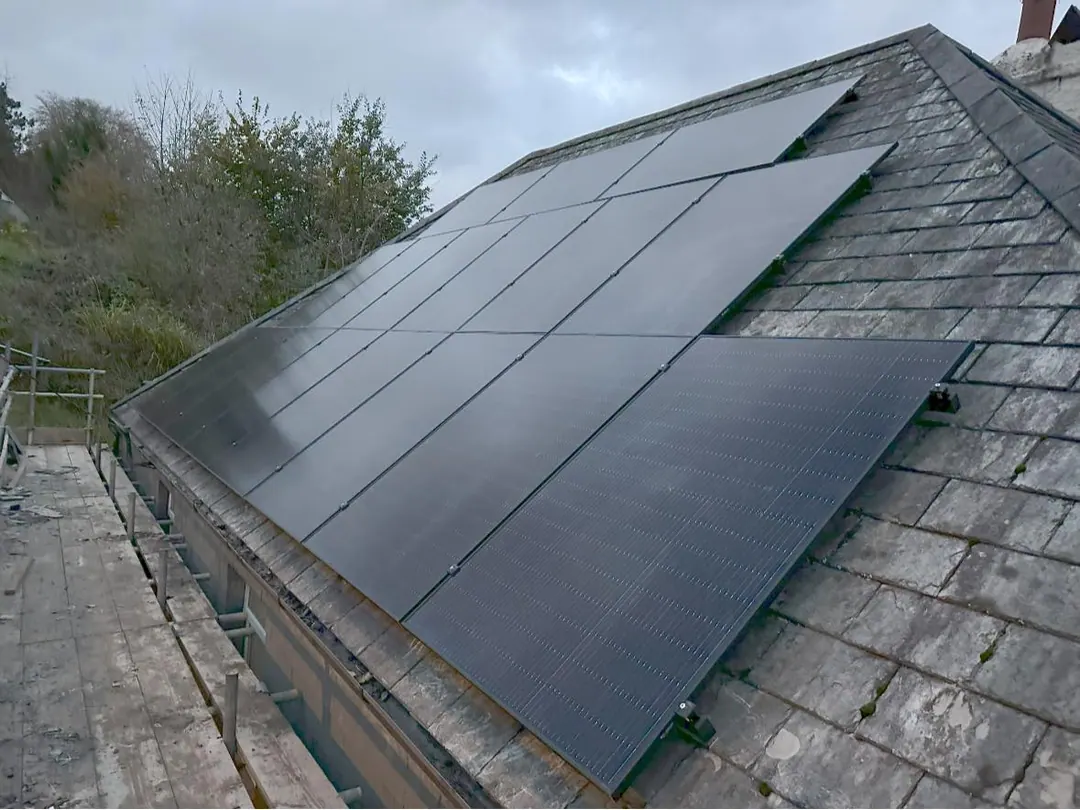
Most homes inside Dartmoor or Exmoor can have solar panels on the roof without a planning application. Dartmoor National Park planning, like Exmoor’s, starts from the national permitted development rules that apply across England, with extra steps because national parks count as protected “Article 2(3) land”. Those rules were updated on 27 August 2026. This guide covers what you can usually fit, what needs prior approval or full permission, and how to ask each National Park Authority. We’re based at Lewdown, near Okehampton, outside the Dartmoor boundary.
Who decides planning inside Dartmoor and Exmoor
Inside each park, the National Park Authority is the sole local planning authority, under section 4A of the Town and Country Planning Act 1990.
Devon holds all of Dartmoor and a third of Exmoor, says Devon County Council. Dartmoor covers 954 square kilometres and 34,500 people live on it, by its Authority’s figures. On Exmoor, Lynton and Parracombe both fall inside the park.
The boundary matters more than the postcode. Our base at Lewdown and the centre of Okehampton are outside the park, in West Devon Borough Council’s planning area, yet nearby Belstone and Lydford are inside it, according to the government’s planning data. Neighbouring homes can answer to different authorities, so the first check is which side of the line you’re on.
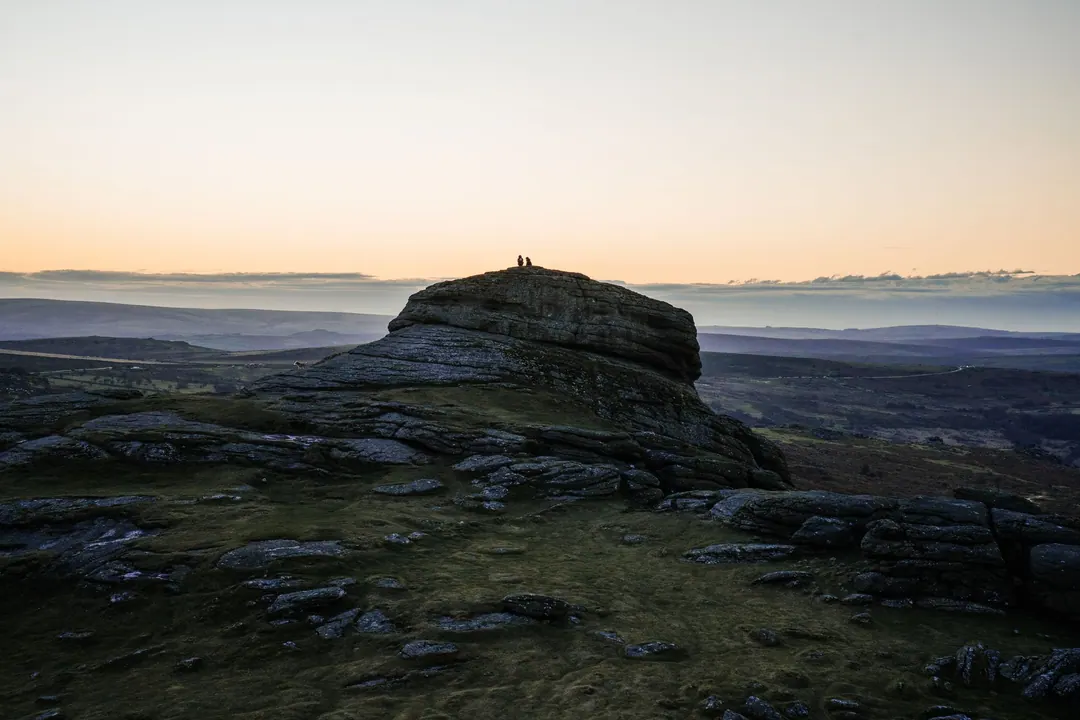
Haytor, pictured, is part of the land Dartmoor National Park Authority owns itself.
What Article 2(3) land means for solar
National parks are listed in Schedule 1 of the General Permitted Development Order (GPDO), alongside conservation areas, areas of outstanding natural beauty, the Broads and World Heritage Sites. For solar at a house, being on that list adds two prior approval steps:
- Panels on a flat roof need a prior approval application before work starts.
- A ground-mounted array within 5 metres of your boundary needs one too.
Panels on the pitched roof of an unlisted house follow the same limits as anywhere else in England. If you’re new to the technology, start with what solar PV is and how a system fits together.
The limits for roof panels on a house
Under Class A of Part 14 of the GPDO, panels on a house, or on a building in its grounds, are permitted development within these limits:
| Where the panels go | The limit |
|---|---|
| Pitched roof | No more than 0.2 metres out from the slope, and no higher than the highest part of the roof, excluding the chimney |
| Flat roof | No more than 0.6 metres above the highest part of the roof, excluding the chimney, with prior approval first in a national park |
| Wall, balcony or roof enclosure next to a highway | No more than 0.2 metres out |
| Any other wall, balcony or roof enclosure | No more than 0.4 metres out |
Panels must also be sited, so far as practicable, to minimise their effect on the building’s appearance and the amenity of the area, and removed as soon as reasonably practicable once no longer needed. Dartmoor’s Authority gives the same roof and wall limits.
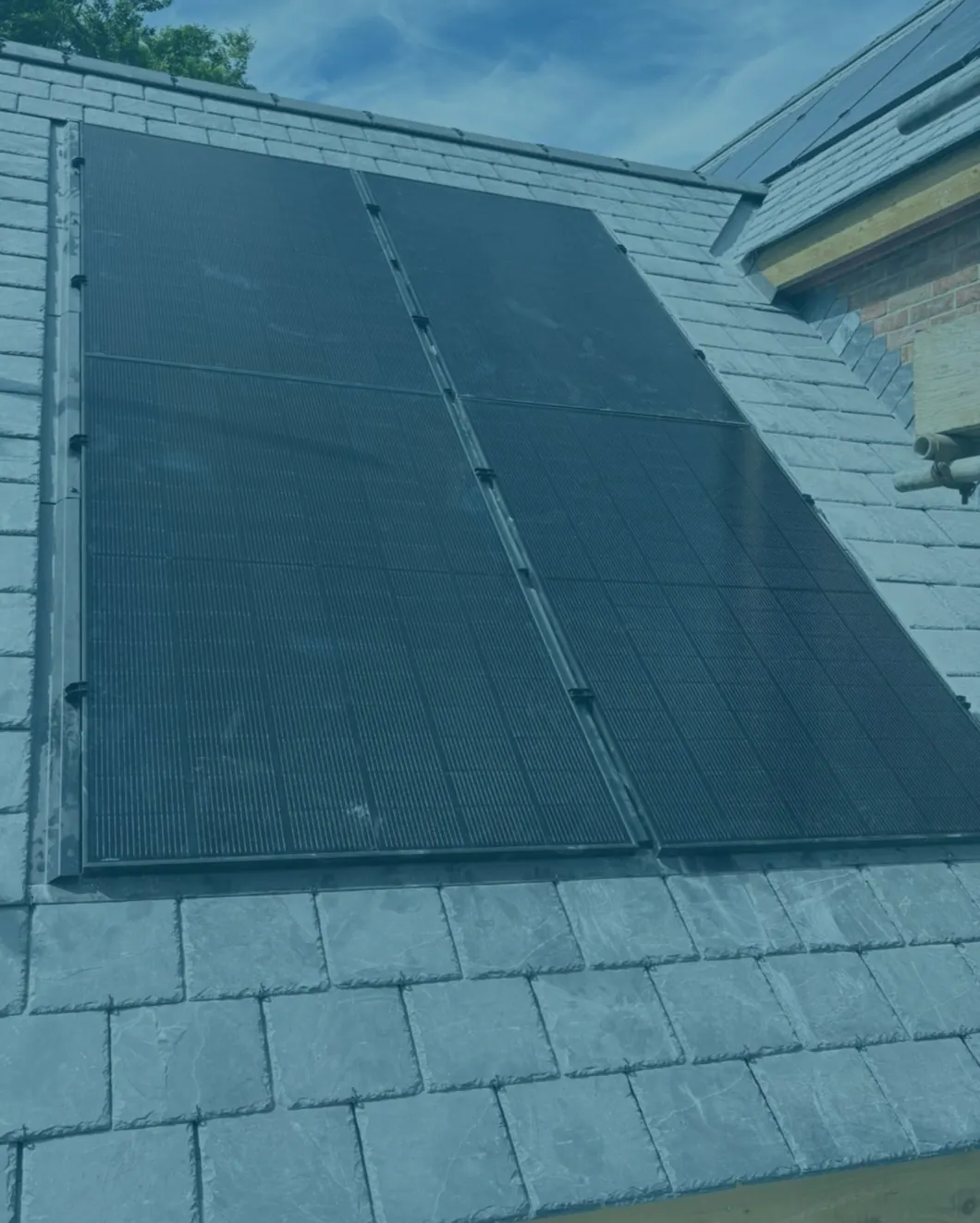
On slate roofs we also fit in-roof arrays, like this one, which sit in line with the slates rather than on top of them.
What changed on 27 August 2026
The Town and Country Planning (General Permitted Development) (England) (Amendment) Order 2026 came into force on 27 August 2026. For homes in the parks, these changes matter:
-
Houses and blocks of flats now have separate limits, and houses have new limits for walls, balconies and roof enclosures, shown above.
-
Plug-in solar, meaning panels that connect through a standard plug and socket, now counts as solar PV, though not on a wooden wall, balcony or enclosure, or a timber-clad part of the house.
-
Ground-mounted arrays at a house no longer have to stand 5 metres from the boundary. Height limits apply instead, and in a national park an array within 5 metres of the boundary now needs prior approval.
If work was permitted under the old wording and the new wording rules it out, you can still carry it out until the end of 26 August 2027.
Ground-mounted panels in the garden
Class B covers stand-alone solar within the grounds of a house (the law’s word is curtilage). The panels can cover no more than 9 square metres, and the lowest height limit that applies wins:
| Where the array stands | Height limit |
|---|---|
| Within 5 metres of the boundary and in front of the house’s principal elevation | 1 metre |
| Within 5 metres of the boundary | 2 metres |
| In a conservation area, nearer a bounding highway than the house is | 2 metres |
| Anywhere else in the grounds | 4 metres |
Inside either park, an array within 5 metres of the boundary also needs prior approval. The right doesn’t cover a listed house’s grounds or a scheduled monument, and an array in a field beyond the garden falls outside it.
Exmoor’s Authority says small freestanding arrays, well screened in enclosed gardens or close to existing buildings, may be preferable to visually intrusive roof panels. It points to its Local Plan Policy CC-D4, “Freestanding Solar Arrays”, which supports them.
Prior approval: what the application involves
Prior approval is a narrower check than a planning application. It asks the National Park Authority whether it needs to approve one thing, how the panels will look. Paragraph J.4 of Part 14 sets the procedure:
-
You send a written description, a plan showing the site and the panels, and a contact address, with any fee.
-
The Authority tells neighbours, by a site notice shown for at least 21 days or a notice served on adjoining owners or occupiers.
-
Work can’t start until the Authority confirms approval isn’t needed, gives it, or lets 56 days pass without deciding.
The Authority can refuse if the details don’t show the panels meet the rules, so a clear drawing matters.
Listed buildings, conservation areas and monuments
Dartmoor is home to 2,750 listed buildings, 1,082 scheduled monuments and 25 conservation areas, by its Authority’s count. Exmoor has 17 conservation areas, including Lynton, Lynmouth and Parracombe.
- Listed houses. Permitted development doesn’t apply to a listed house or the buildings within its grounds, so outbuildings in a listed farmhouse’s grounds are caught too. Dartmoor’s Authority says planning permission will be needed and listed building consent may be. Exmoor’s says panels on a listed building are very likely to need listed building consent.
- Conservation areas. Panels can’t go on a wall, balcony or roof enclosure fronting a highway, and a ground array nearer a bounding highway than the house is capped at 2 metres and needs prior approval.
- Scheduled monuments. Permitted development doesn’t cover panels on one.
Conservation areas apply outside the parks too. The centre of Okehampton is one. A conservation area is also Article 2(3) land, so the conservation-area rules and the same prior approval steps apply there, with West Devon Borough Council deciding rather than the park.
Barns and farm buildings
A working barn isn’t a house, so Class J, for non-domestic buildings, applies. Panels can stand no more than 0.2 metres off a pitched roof or 1 metre above a flat one, and none may sit within 1 metre of the roof’s edge. Class J doesn’t cover a listed building or one within a listed building’s grounds, and on Article 2(3) land, wall panels can’t go on a wall fronting a highway. Our page on solar for farm buildings and barn roofs explains how we plan a farm system.
Article 4 Directions and earlier planning conditions
Two things can take permitted development away from a particular home:
- An Article 4 Direction removes rights in a set area or for a particular development. Exmoor publishes its Directions, each for named land, on its planning pages. Government guidance says withdrawing rights for microgeneration needs a particularly strong justification.
- A condition on an earlier planning permission. The GPDO permits nothing contrary to such a condition, so if your home was built or converted under a planning permission, read its decision notice.
Dartmoor’s Authority notes that rights “may also be restricted by planning conditions or Article 4 Directions”. Be wary of a cold caller who says planning never applies in a national park. Our guide to spotting a solar panel scam covers other warning signs.
Asking the National Park Authority
Dartmoor National Park Authority offers two routes when you’re unsure:
| Pre-application advice | Lawful Development Certificate | |
|---|---|---|
| What you get | Informal guidance on whether a proposal is likely to be supported | A formal, legally binding decision on whether permission is needed |
| Usual timescale | Within 6 weeks for minor proposals | 8 weeks from validation |
| How to apply | The Authority’s online portal | The Planning Portal |
Both carry a fee. It gives no planning advice by phone or through its planning email inbox, and warns of longer response times for pre-application enquiries while a new IT system goes in. It adds that solicitors and lenders often require a certificate.
Exmoor National Park Authority runs its own pre-application service and invites draft proposals to specialist officers, including its Historic Buildings Conservation Officer and Landscape Officer.
Designing panels that suit the moor
Exmoor’s guidance has design advice that works in either park:
-
Use a rear roof slope, so the panels are less prominent.
-
Consider an angled frame on a flat roof (with prior approval), or a modern extension, outbuilding or garage.
-
Choose non-shiny materials, such as matte black panels.
-
Line the array up with windows or similar features.
What we check at your survey
Our free site survey takes about an hour at your property, and the planning picture is part of it. We check:
- which side of the park boundary you’re on, and so which authority decides
- whether the house is listed or in a conservation area
- your planning history, for conditions or an Article 4 Direction
- whether the design needs prior approval
Planning is separate from the grid connection, where a G99 application to National Grid may be needed. We handle that. Read how our solar panel installation works, or see our work across Devon. A home battery can keep what your panels make in the day for the evening. Every installation includes a year of The Solar Owners Club, with an annual system health check, and for an existing system our solar panel maintenance visit covers the yearly check.
Dartmoor National Park planning, in short
Roof panels on an unlisted house, within the limits above, usually need no application in either park. Flat roofs and ground arrays near your boundary need prior approval, and a listed house needs planning permission. If you’re unsure, Dartmoor National Park planning officers and their Exmoor counterparts give pre-application advice, and a Lawful Development Certificate settles it formally.