Guide
Depth of discharge and round-trip efficiency, in plain words
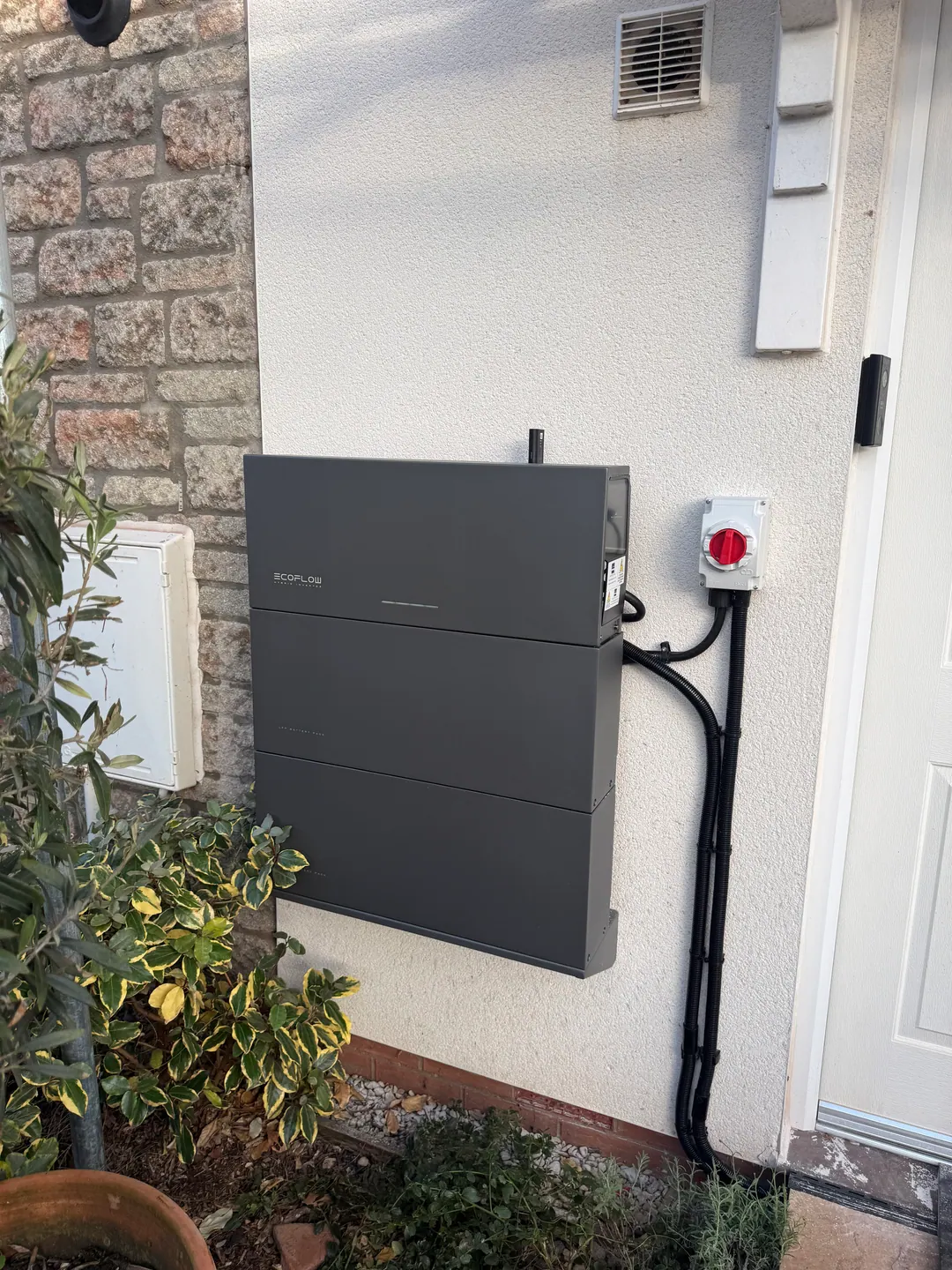
Depth of discharge and round-trip efficiency are two figures you’ll meet when comparing home batteries, and they tell you more than the big number on the front. One says how much of the stored energy you can use. The other says how much of the electricity you put in comes back out. This guide explains both in plain words, using figures from the makers’ own datasheets and manuals for the three battery systems we fit: Sigenergy, Fox ESS and EcoFlow PowerOcean. Each figure belongs to the battery it’s quoted for, so we name the maker every time.
What depth of discharge means
Depth of discharge, often shortened to DoD, is how far a battery is allowed to empty, given as a percentage of its capacity. A rating of 90% depth of discharge means nine-tenths of the stored energy is available to use.
A quick example with round numbers, not any maker’s: a 10 kWh battery at 90% depth of discharge gives you about 9 kWh to use, and at 100% it gives you all 10 kWh. That usable figure, in kilowatt-hours (kWh), is the one that decides how far into the evening your stored solar lasts.
Total, nominal and usable: three ways to give a size
Battery sizes are printed in more than one way:
-
Total or nominal energy is the full rated size. Sigenergy calls it “total energy capacity”, while Fox ESS and EcoFlow call it nominal.
-
Usable energy is the part you can draw on. Some makers print it, and some leave you to work it out.
-
Depth of discharge links the two, but each maker sets its own basis.
Sigenergy’s datasheet says its 100% depth of discharge “refers to the usable energy capacity”, and its usable figure sits a little below the total. So 100% there doesn’t mean every last kilowatt-hour of the total. The fairest comparison between two batteries is usable kWh against usable kWh.
Depth of discharge on three makers’ datasheets
Here are the figures as each maker prints them, checked on 2 November 2026:
| Battery (maker) | Size as printed | Usable energy | Depth of discharge |
|---|---|---|---|
| Sigenergy Sigen Battery 6.0 | 6.02 kWh total | 5.84 kWh | 100% of usable |
| Sigenergy Sigen Battery 10.0 | 9.04 kWh total | 8.76 kWh | 100% of usable |
| EcoFlow PowerOcean LFP pack | 5.1 kWh nominal | 4.8 kWh | 95% |
| Fox ESS EP6 | 5.76 kWh nominal | about 5.2 kWh* | 90% |
| Fox ESS EP12 | 11.52 kWh nominal | about 10.4 kWh* | 90% |
| Fox ESS EQ5000 module | 4.92 kWh | about 4.4 kWh* | 90% |
*Our arithmetic, 90% of the printed size. Fox’s datasheets give the size and the depth of discharge but no separate usable figure.
By our sum, Sigenergy’s usable figure is about 97% of its total, so its 100% and EcoFlow’s 95% are closer than they look. That tells you what to compare, not which battery is better. Our pages on the SigenStor systems we install, the Fox ESS batteries and inverters we fit and EcoFlow PowerOcean battery packs carry the rest of each maker’s figures.
Your app’s reserve setting is a second limit
Depth of discharge is the maker’s limit. The apps for the three systems we fit also let you set your own floor, as set out below, and the energy below it stays in the battery on an ordinary evening. State of charge (SOC) is simply how full the battery is, as a percentage.
-
Fox ESS: the FoxCloud 2.0 app has a System Min. SOC, which “stops discharging once the SOC reaches the set value during grid-connected operation”, and a separate Backup Cut-off SOC for off-grid operation.
-
Sigenergy: where a Sigenergy gateway is fitted, the Backup Reserve in the mySigen app stops the battery discharging at the set level while the grid is connected, and lets you use that energy when the grid goes down.
-
EcoFlow: the Backup Reserve in its app lets you choose a backup ratio, and the system keeps the battery reserve around it.
A reserve earns its place when backup power is part of your design, and our guide to power cuts in Devon and Cornwall explains when that applies. Without backup, a high reserve mainly shrinks what you use each day, so it’s one of the first settings to check if your battery seems to stop early.
What round-trip efficiency means
Round-trip efficiency is, in the words of the US Energy Information Administration, “the percentage of electricity put into storage that is later retrieved”. The higher it is, the less energy is lost in the storage process.
Another round-number example: put 10 kWh into a battery with a 95% round-trip efficiency and about 9.5 kWh comes back out. The missing half a kilowatt-hour is the cost of storing it, which is why using solar as it’s generated, when you can, gets the most from every kilowatt-hour.
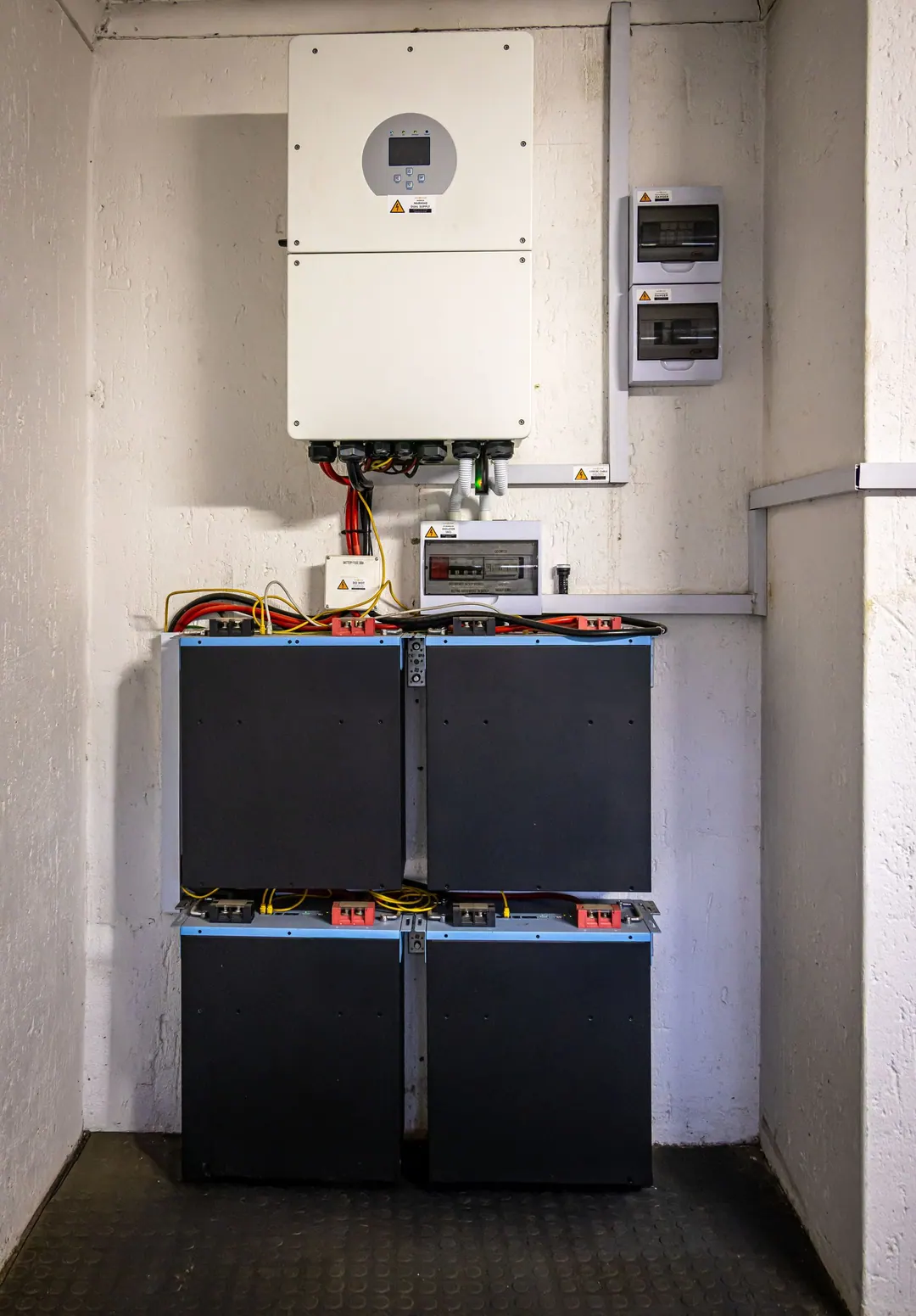
Pack figures and inverter figures measure different things
Check which part of the system a round-trip figure covers. Fox ESS prints its figure as “Battery Pack Round-Trip Efficiency”, so it describes the pack itself. The inverter, which converts electricity on the way in and out, has figures of its own:
| Figure on the datasheet | Product (maker) | Value |
|---|---|---|
| Battery Pack Round-Trip Efficiency | Fox ESS EP6 and EP12 | at least 95% |
| Battery Pack Round-Trip Efficiency | Fox ESS EQ5000 | above 95% |
| Max. Battery Charge Efficiency (PV to BAT), at full load | Fox ESS H1-G2 inverter | 98.50% |
| Max. Battery Discharge Efficiency (BAT to AC), at full load | Fox ESS H1-G2 inverter | 97.00% |
| Maximum Efficiency | PowerOcean single-phase hybrid inverter (EcoFlow) | above 96% |
On a Fox ESS system, each step loses a little, so the share of your solar that reaches the kettle by way of the battery is lower than any one of Fox’s figures on its own, and the inverter figures are maximums at full load. Sigenergy’s Sigen Battery datasheet and EcoFlow’s PowerOcean battery manual give no round-trip efficiency figure that we could find, so we don’t quote one for either. If you’re offered a whole-system number, ask where it comes from. Our guide to Fox ESS inverter models covers the H1-G2 and the rest of the range.
How depth of discharge ties in with cycle life
Cycle life is the number of charge and discharge cycles a battery is rated for, under test conditions the maker states, such as temperature, charge rate and sometimes depth of discharge. The conditions differ:
-
Fox ESS EP6 and EP12: at least 6,000 cycles, tested at 25 °C, 90% depth of discharge and a 1C rate, to 70% state of health.
-
Sigenergy Sigen Battery: 10,000 cycles, a figure the datasheet says the cell maker provided, from cell tests at 25 °C (±2 °C), a 0.5C rate and 60% state of health.
Both tests run to a stated state of health, 70% for Fox and 60% for Sigenergy, at different rates, and Sigenergy’s is a cell figure. So the two aren’t a straight contest. Warranties are a better guide to what each maker stands behind, and our guide to the Sigenergy warranty and battery lifespan works through one in detail.
Cold weather and the usable share
The makers say plainly that cold changes things:
-
EcoFlow: the PowerOcean battery manual says that in low temperatures the depth of discharge “may vary with actual temperature”, calling it “a normal fluctuation”. It adds that the built-in heating uses stored power, which “reduces the system energy efficiency for a short time in cold weather”.
-
Fox ESS: the EQ5000 datasheet says charging is derated between 0 °C and 15 °C, and that the battery charges from 0 °C unless the optional warm-up function is on. The EP datasheets list smart battery warming.
So a battery in a cold garage can give a little less on a frosty morning than it does in spring. We look at the space during the survey and agree a location with you, so if you have a choice of garage or utility room, tell us.
Leaving a battery empty
Leaving a battery empty is different from using its full depth. Sigenergy’s datasheet says the Sigen Battery “must be recharged within 7 days after being fully discharged to keep battery healthy”, and its 2024 SigenStor Home user manual, written for the SigenStor BAT 5.0 and 8.0, explains that a battery slowly loses charge on its own, so one left uncharged for a long time can be damaged by over-discharge. The same manual asks for a battery at 10% or more to be charged within 30 days. If your home will stand empty for long spells, tell us at the survey.
Sizing a battery around what you’ll actually use
When we size solar battery storage for homes around Plymouth and across Devon and Cornwall, we start with when your household uses electricity, especially in the evening, and your quote shows the measurements that matter. The battery’s usable energy, after depth of discharge and any reserve, is what has to cover those hours.
If you already have panels, the same sums apply to adding a battery to your existing solar. If you’re torn between more panels and more storage, our guide to more solar panels or a bigger battery sets out how to choose. The right system is not always the biggest one.
Questions to ask about any battery quote

Whoever quotes you, these questions turn datasheet lines into answers:
-
What is the usable energy in kWh, not just the total or nominal size?
-
Is the depth of discharge a share of the total or of the usable figure?
-
What reserve will be set in the app, and why?
-
Does the round-trip efficiency quoted cover the battery pack alone, or the whole system?
-
What cycle life and warranty apply, and under what conditions?
Ask us any of these about the system we recommend. Every installation we carry out includes a year of The Solar Owners Club, with an annual system health check and a dedicated support line.
Comparing depth of discharge with round-trip efficiency
Depth of discharge tells you how much of a battery’s stored energy you can use, and round-trip efficiency how much of what you put in comes back. Each maker sets both on its own basis, so read them with the usable kWh figure, your app reserve and the conditions behind any cycle life. On the datasheets and manuals we checked, that means 90% depth of discharge for Fox ESS EP and EQ batteries, 95% for an EcoFlow PowerOcean pack and 100% of usable capacity for a Sigen Battery.