Advice
More Solar Panels or a Bigger Battery? How to Choose for Your Home

If you already have solar panels, the next upgrade often comes down to one choice: more solar panels, or a bigger battery, or a first one. They solve different problems. Panels make electricity, while a battery only moves it from the middle of the day into the evening. Below, with figures we modelled for a roof in Cornwall, is what decides it: daytime use, export, roof space, winter output and the network operator.
When more panels beat a bigger battery
A battery doesn’t change how much your panels generate, only when you can use it. That settles most cases.
-
A battery, or a bigger one, helps when the panels make more than the house uses in the day, the surplus is exported, and you buy electricity back in the evening.
-
More panels help when the house already uses what the panels make and still buys from the grid in daylight, which shows most in winter.
-
Both can make sense when the roof has space and the evenings are busy.
Our rule is the right system, not the biggest one. Based on how you use electricity, that can mean putting the money into battery capacity rather than more panels, or the reverse.
Start with what your system does now
Three sets of readings tell most of the story:
- Export: from your export meter, typically a smart meter, or your export payment statements.
- Evening import: from your bills or your smart meter readings.
- Generation: from the inverter’s app or the generation meter.
If output looks low, deal with that first, because neither option fixes a fault. Our one-hour Annual Solar Health Check tests and inspects a system, whoever installed it, and our post on the signs a system needs a health check lists what to look for.
What a Cornish roof makes, month by month
We ran PVGIS, the EU Joint Research Centre’s solar model, for an example 4kWp array facing south near Bodmin, then with 2kWp more panels on the same face. Ofgem’s medium household uses 2,500 kWh a year, about 6.85 kWh a day if spread evenly.
| Month | 4kWp, kWh a day | 6kWp, kWh a day |
|---|---|---|
| January | 5.0 | 7.4 |
| February | 8.3 | 12.4 |
| March | 11.7 | 17.6 |
| April | 16.1 | 24.2 |
| May | 16.4 | 24.7 |
| June | 16.7 | 25.0 |
| July | 16.1 | 24.1 |
| August | 14.7 | 22.0 |
| September | 13.0 | 19.5 |
| October | 8.4 | 12.6 |
| November | 6.0 | 9.0 |
| December | 4.2 | 6.4 |
| Year, kWh | 4,158 | 6,236 |
An average June day on the 4kWp roof makes more than twice a medium home’s daily use. December makes about a quarter of June’s output, and less than that home uses.
How we ran the numbers
We used PVGIS 5.2 through its API on 2 November 2026:
-
PVGIS-SARAH2 satellite data for 2005 to 2020, at 50.47° N, 4.72° W.
-
Crystalline silicon panels facing due south at a 35° tilt, on PVGIS’s free-standing mounting with its calculated horizon for shade from hills.
-
Losses at its default 14% for cables, the inverter, dirt and so on.
-
Use at Ofgem’s medium figure for a standard single-rate meter, divided by 365.
PVGIS puts the 4kWp roof’s year-to-year swing at about 170 kWh, as one standard deviation. Our guide to what solar PV is, with kW, kWh and kWp explained, covers the units.
Daytime use decides what a battery can do
How much output you use as it’s made depends on who is home and what runs in daylight, such as a dishwasher on a timer or someone working from home. What’s left charges the battery, which runs the house in the evening and overnight until it’s empty, when the grid takes over.
So a battery needs a surplus to fill it, and in June the 4kWp roof leaves plenty.
-
If your battery’s app shows it full by early afternoon on most summer days and empty by bedtime, more capacity could help.
-
If it rarely fills, a bigger one won’t change much, and more panels may be the better step.
Winter: where extra panels show most
On an average December day the 4kWp roof makes about 4.2 kWh, below a medium home’s use, so there’s little to store and a bigger battery would sit partly empty. Adding 2kWp on the same face lifts that day to about 6.4 kWh, and in PVGIS the gain is about 50% in every month.
This matters more where the heating runs on electricity. At the 2021 Census, 15.2% of Cornish households had electric-only central heating, against 8.7% across England.
Some systems can also charge the battery from the grid. Fox ESS’s app, for example, has a Forced Charge mode that uses solar and grid power between start and end times you set, which can match a cheaper overnight rate if your tariff has one.
Roof space, and which way extra panels face
If the best face of your roof is full, extra panels usually mean a second face, laid out around its orientation and shading, or a ground-mounted array, both part of how we design solar panel installation for homes. In most cases planning permission isn’t required, but exceptions apply in conservation areas and on listed buildings.
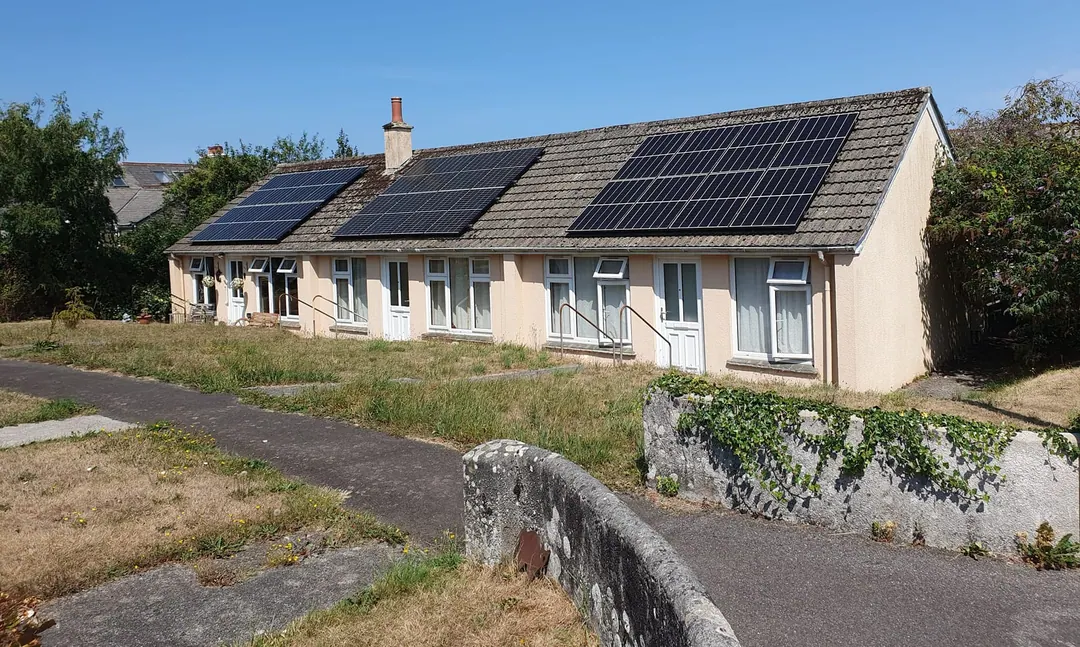
Our PVGIS runs for 2kWp of extra panels near Bodmin, with the same tilt and losses, show that direction counts most in winter:
| Extra 2kWp facing | kWh a year | June, kWh a day | December, kWh a day |
|---|---|---|---|
| South | 2,079 | 8.3 | 2.1 |
| East | 1,659 | 7.8 | 1.1 |
| West | 1,667 | 8.0 | 0.9 |
East or west panels make about a fifth less than south over the year and nearly as much in June, but half as much or less in December.
Export, the SEG and export limits
Under the Smart Export Guarantee (SEG), you’re paid for every unit you export but not for any you use yourself, though using it means importing less from the grid. SEG suppliers set their own terms, and Ofgem says any SEG tariff must stay above zero. You need a meter that records half-hourly export, typically a smart meter, and an installation and installer certified through MCS or an equivalent scheme. Ours is certificate NIC-601527.
So compare what your SEG tariff pays per unit exported with what you pay per unit imported: the wider the gap, the more a unit a battery keeps for the evening is worth against one that extra panels export.
Export limits matter too. NGED’s SGI-2 fast track allows up to 32A of generation and storage in total but holds export to 16A with a G100 export limitation scheme. Under a cap like that, extra panels on a bright day can make more than the house and the cap can take, and a battery catches the rest.
Ask us which suits your system
The network operator: G98 and G99
Across Cornwall and Devon the network operator is National Grid Electricity Distribution (NGED). It adds up the AC ratings of the inverters and storage at the property, not the panels’ kWp.
| Total rating at the property | NGED route | Order |
|---|---|---|
| 16A (3.68kW) per phase or less, fully type-tested | G98 | Fit, then notify within 28 days of commissioning |
| Each device 16A or less, total 32A or less, export held to 16A | G99 fast track, SGI-2 | Apply, then notify within 28 days of commissioning |
| Larger | G99 fast track SGI-3, or a standard G99 application | Apply before connecting |
G98 covers fully type-tested micro-generators up to and including 16A per phase. So:
- Extra panels on your existing inverter don’t change its rating, if the inverter can take them.
- A battery with its own inverter, or a second inverter for new panels, adds to the total. An existing 16A inverter plus a 16A battery inverter makes 32A, past G98 and within SGI-2’s limits.
- A new hybrid inverter replaces the old rating with its own.
Where an application is needed, we handle it for you.
If your panels are on the Feed-in Tariff
Ofgem’s rules treat the two options differently:
- Extra panels earn no FiT on the added capacity unless the extension was commissioned before 15 January 2016, and where the meters record both, payments are prorated.
- A battery leaves your payments unaffected, as long as your generation, and your export if it’s metered, can still be measured accurately.
Either way, tell your FiT licensee. You also can’t receive a SEG tariff while getting FiT export payments. Our Feed-in Tariff guide for existing owners covers the rest.
Choosing battery capacity, and adding more later
Compare usable kWh, not the number on the box. Sigenergy’s SigenStor BAT 10.0 holds 8.76 kWh usable out of 9.04 kWh in total, Fox ESS rates its EQ and EP batteries for 90% depth of discharge, and each EcoFlow PowerOcean pack holds 4.8 kWh usable out of 5.1 kWh.
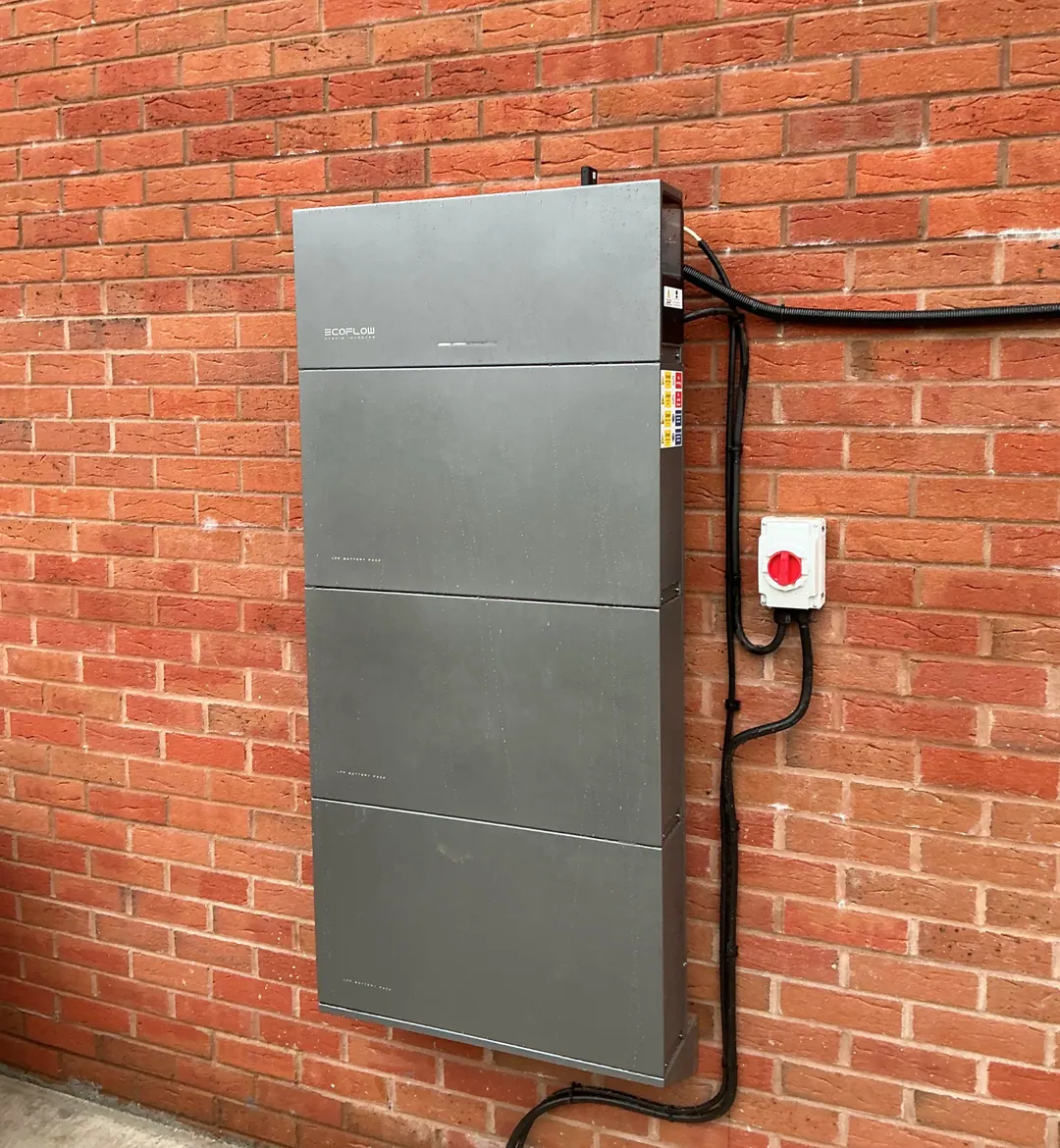
The batteries we fit are modular, so capacity can often be added as your needs change. See the Sigenergy SigenStor systems we install or solar battery storage sized to your evenings. If you have panels but no battery yet, our page on adding a battery to existing solar panels sets out the two usual routes, whoever fitted your system.
How much solar fills a 10kWh battery
Near Bodmin, each kWp facing south at 35° makes about 4.2 kWh on an average June day, 2.9 kWh in March and 1.1 kWh in December, by our PVGIS run. Putting 10 kWh into a battery takes roughly:
- June: 2.4kWp of panels.
- March: 3.4kWp.
- December: 9.4kWp.
That counts only surplus beyond what the house uses at the time, so a real home needs more. Divide by your panels’ rating in kW for a count, and check the battery’s usable capacity.
What we look at before recommending either
-
A recent bill, and your export readings if you have them.
-
When your household uses the most electricity.
-
What your panels make now.
-
Which roof faces are free, and what shades them.
-
Whether you’re on the FiT.
-
Plans that will change your use, such as an electric car charger.
We work with homes across Cornwall from our base near Okehampton, about 3 miles from the border as the crow flies, and every installation we carry out includes a year of The Solar Owners Club, with discounted upgrade products for members. Whether the answer is more solar panels, a bigger battery or neither, we’ll tell you plainly.