Advice
Power cut in Cornwall or Devon? Who to call, and what your solar will do
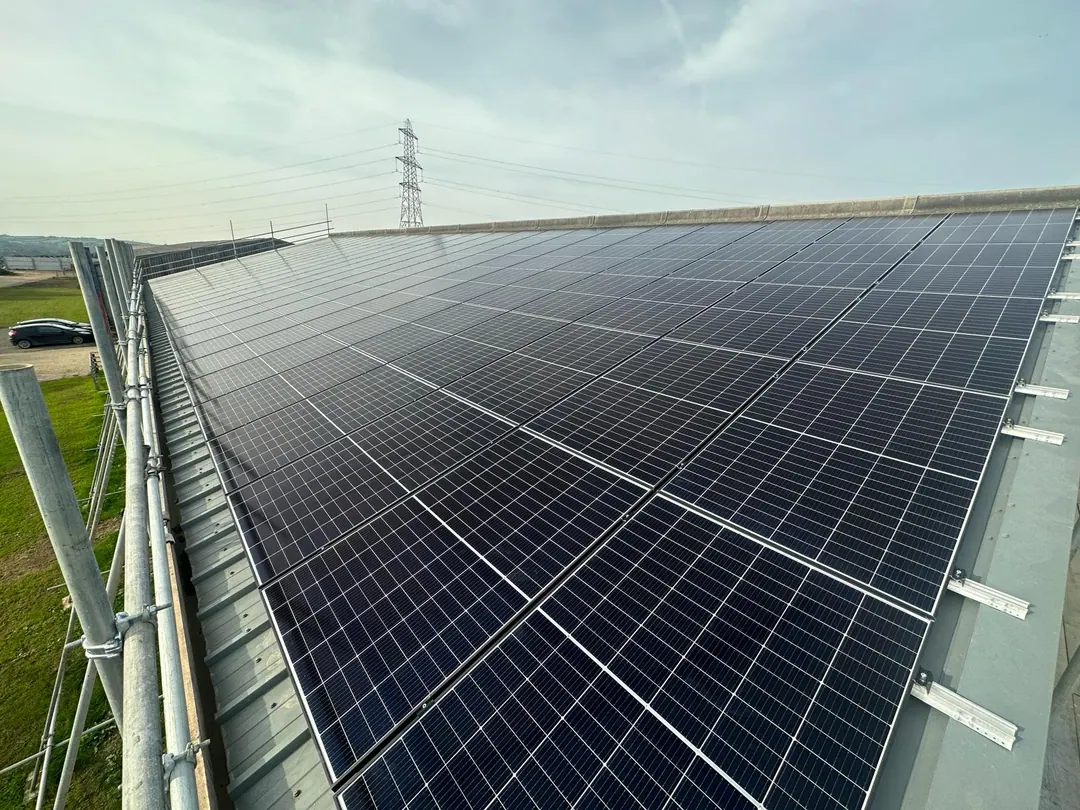
A power cut in Cornwall or Devon is fixed by the same company: National Grid Electricity Distribution, known as NGED. Call 105, free from any phone, or search your postcode on its online power cut map. If your home has solar panels, expect them to switch off too, even on a bright day. That’s deliberate. Below we explain why, and what it takes for a battery to keep your home running.
We fit solar panels and batteries across both counties from our base near Okehampton, and every answer here comes from official sources or the makers.
Who runs the electricity network in Cornwall and Devon
Your energy supplier sends the bills, but NGED runs the local network that keeps the power on. Its South West licence area covers both counties: about 1.4 million customers over roughly 14,400 square kilometres, stretching some 300 km from Bristol and Bath to Land’s End, plus the Isles of Scilly. NGED calls it largely rural. It takes in Exeter, Plymouth and Torquay, and Dartmoor and Exmoor, among the most sparsely populated parts of the UK. Truro or Torquay, Plymouth or Exeter, it’s the same network and the same number.
- The old name. Western Power Distribution was renamed National Grid from 21 September 2022. In a power cut, you should still call 105.
- Your bill. The MPAN on your electricity bill includes a Distributor ID. For South Western England it’s 22, and the operator is NGED. Some homes are on small independent networks, which have their own IDs.
Is it a power cut, or just your house?
NGED suggests a few checks before you report anything. We’ve added one for solar owners.
-
Look outside. Ask a neighbour, or at night check the street lights.
-
Check your trip switch. In your fuse box, the main trip switch is the biggest one and usually red. If it’s off, NGED’s advice is to switch off or unplug everything at the sockets, then turn it back on.
-
Leave the solar equipment alone. Don’t touch the isolators for your panels, inverter or battery. Isolation and fault work on solar is for a qualified installer.
-
Keep the freezer shut. NGED points out that most power cuts are short.
-
Protect your electronics. Surges can damage phones, TVs and laptops, so unplug them.
How to report a power cut in Cornwall or Devon
Call 105. It’s free from any network, 24 hours a day, and puts you through to your local network operator, which here is NGED. If you’re deaf or hard of hearing, dial 18001 first and a Text Relay operator joins the call.
NGED’s live power cut map works from your postcode. For a fault it already knows about, it shows how many properties are off and an estimated time of restoration. If nothing shows for your area, report it through NGED’s online power tracker, which asks you to check your trip switches and meter first. NGED may not know you have no power until you tell it. In bad weather, you can also register with NGED for storm updates.
Fallen lines, storms and staying safe
Storms can mean long power cuts. In January 2026, the government told MPs that Storm Goretti brought a peak gust of 99 mph on the Isles of Scilly and was the worst windstorm in parts of Cornwall and the Isles of Scilly for 30 years. NGED deployed 900 engineers and field staff across the South West. The final properties were the hardest, the government said, because repairs might be needed at individual homes in remote locations, where fallen trees or debris might still block access.
NGED’s safety advice:
-
Treat any fallen overhead line as live. Keep your distance and report it straight away. If it blocks a road or path, call the police on 999.
-
Look up before clearing branches, and never handle anything that may be touching an overhead line.
-
Never use a portable generator or a barbecue indoors. Both can give off carbon monoxide.
-
If a storm is forecast, unplug sensitive equipment such as computers.
Why solar panels switch off in a power cut
Grid-connected solar is built to disconnect when the grid fails. NGED says most low carbon technologies, solar panels included, “have protective systems installed as standard to disconnect them in the event of a fault”. The connection rules require it: under G98, the route for small, fully type-tested installations, Grid Interface Protection must be installed and functionally tested.
In NGED’s words: “If you do not have a system that operates in standby/island mode, your generation system will be designed to shut down during a power outage.” Sunshine makes no difference. Nor does a battery on its own: unless the system was designed and wired for backup, the battery stops too. For the basics of grid-connected panels, read our guide to what solar PV is.
Heat pumps are different. They can’t feed electricity back into the network, NGED explains, so they generally have no such protection and simply stop until the power comes back.
What happens when the power comes back
Once the grid is back:
- Solar panels “should automatically re-energise after 20 seconds”, NGED says, because generation has to wait that long.
- EV chargers may need switching back on, by NGED’s account.
- If your panels stay off, check the app for a fault message, but don’t open or reset anything on the inverter or battery yourself.
Ring us instead: a system that stays off is a job for our solar panel repair and fault-finding service, whether or not we fitted it.
Backup power: what it takes to keep the lights on
To run through a power cut, a system needs equipment that separates your home from the grid, then powers it from the battery and, where the design allows, the panels. On the makers we fit:
| Maker | Backup equipment | What the maker says |
|---|---|---|
| Sigenergy | Sigen Energy Gateway, with SigenStor | 0 ms load-side disruption, under Sigenergy’s published test conditions |
| EcoFlow | EcoFlow Gateway, with PowerOcean (Single-Phase) | 0 ms load-side switchover, under EcoFlow’s published test conditions |
| Fox ESS | EPS output on the H1-G2 hybrid inverter, with a battery, or the EPS-BOX-SP gateway | The gateway’s changeover takes about 2 to 3 seconds, and full-home backup is “subject to system sizing” |
Whole-home backup isn’t a given: whether a system runs the whole house or only chosen circuits depends on how it’s sized and wired. And a battery can only give you the charge it holds when the power goes. We design solar battery storage around how you use electricity, with backup only where it’s included and suitable, and we’ll tell you plainly whether yours can.
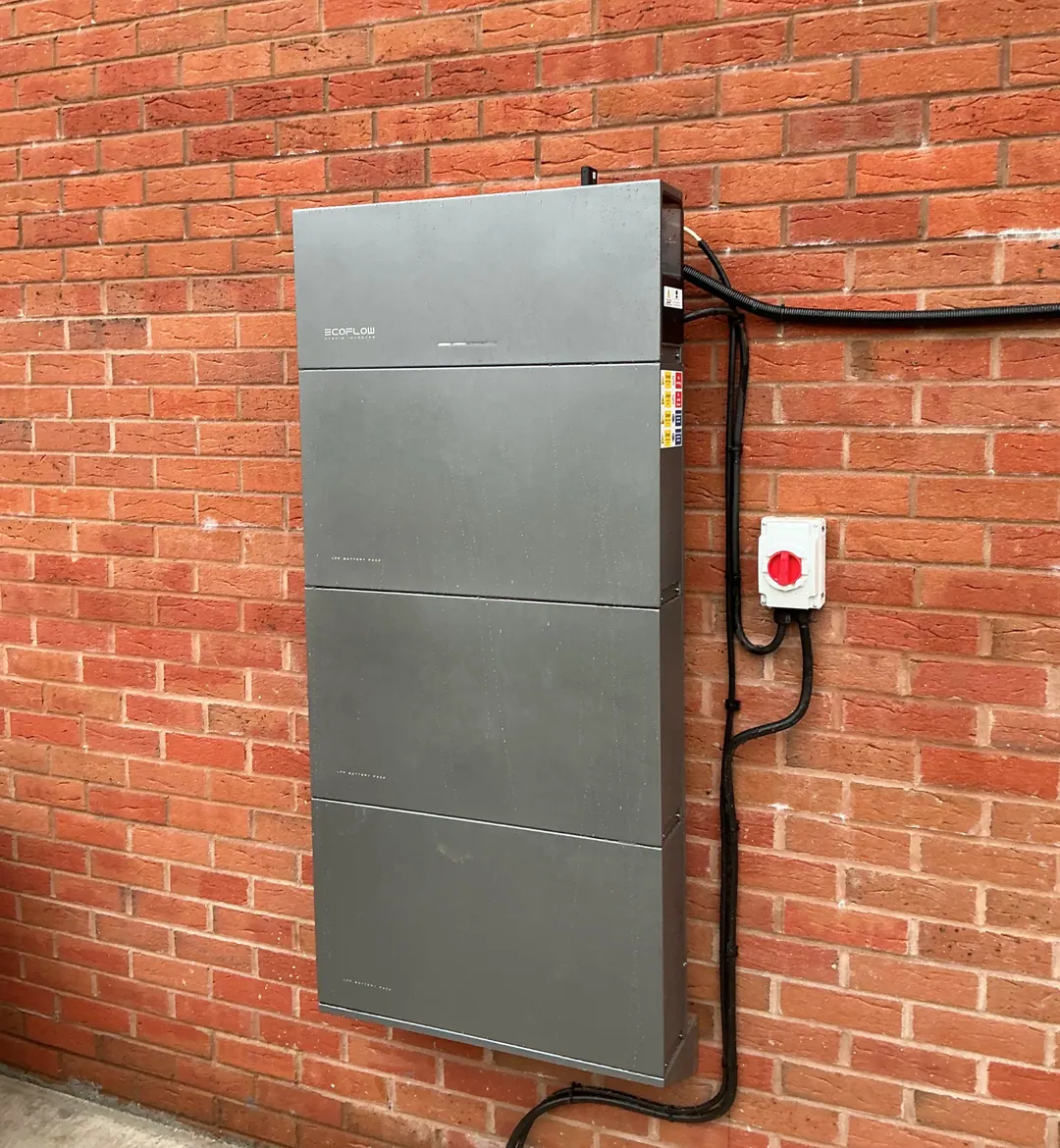
Our guide to the Sigenergy Gateway goes deeper, or compare the Sigenergy systems we install with the EcoFlow PowerOcean systems we fit. Before a planned power cut, NGED suggests switching to island mode if your system has one. Not sure? Ask us rather than changing settings blind.
Adding backup to the solar you already have
Backup is possible on some existing systems, where it’s included and suitable, but the equipment you have decides what fits. Our page on adding a battery to existing solar sets out the routes. The easiest first step is a Battery Quote Request: a 15-minute phone call, at no charge, about your electricity costs and daily use. Tell us at the start if backup matters to you, because it shapes the design.
The Priority Services Register
If someone in your home would struggle in a power cut, join the Priority Services Register (PSR). It’s free, and Ofgem says your energy supplier and your network operator both keep one. You can ask to join if you:
-
have reached state pension age, are pregnant or have young children
-
live with a disability or long-term medical condition, including mental health conditions
-
use medical equipment that needs a power supply
-
struggle with speaking or reading English
-
are recovering from an injury, or need support after a stay in hospital
NGED’s register gives you a direct number during a power cut, a password scheme for visits, updates on planned and unplanned cuts, and help through partners such as the British Red Cross. Ofgem adds that network operators must offer PSR customers extra help, such as battery packs for phones or medical equipment. It’s support rather than speed: asked whether members get their power back sooner, NGED says it aims to restore power to all customers as quickly as possible.
Compensation for a long power cut
Ofgem’s rules set how quickly your network operator must restore your supply:
| Conditions | Supply restored within |
|---|---|
| Outside severe weather | 12 hours |
| Severe storm, category 1 | 24 hours |
| Severe storm, category 2 | 48 hours |
Ofgem adds that the deadline also depends on how many homes and businesses are affected. Miss it and you’re paid automatically, with no need to claim. The amount depends on how long you were off and how many properties were affected. Ofgem’s storm categories count the faults a storm causes on the network, and differ from the Met Office’s. If your power goes off more than four times between 1 April and the following 31 March, each time for at least three hours, you could get an extra payment, but that one you have to claim. Payments don’t cover damaged appliances.
Staying in touch and keeping warm
NGED points out that the new digital landlines run through your broadband router, which needs mains power, so the phone goes off with it unless you have a backup. The government’s Be Ready advice also lists boilers and heat pumps among the things that won’t work without power. In Cornwall, government estimates for 2024 put 47.0% of homes off the gas grid, against 15.6% across England, so plenty of households heat with something other than mains gas. Whatever heats yours, check whether it needs electricity.
NGED suggests keeping these ready:
-
a torch with spare batteries, rather than candles
-
a wind-up, battery or solar radio for local updates
-
a charged power bank for your mobile
-
105 saved in your mobile, and noted somewhere you can find it without power
When to call us after a power cut
Whether you’re in Cornwall or Devon, your first call in a power cut is 105, not us. We come in when your solar won’t restart, or you’d like a battery to cover the next outage. We look after homes across Cornwall and Devon, and every installation we carry out includes a year of The Solar Owners Club, with an annual system health check and a dedicated support line. If the last power cut in Cornwall left you wondering what your panels were doing, ask us.