Guide
Sigenergy inverters explained: single-phase, three-phase and how SigenStor stacks
For a home with Sigen Battery storage, a Sigenergy inverter is one of two things: the Sigen Energy Controller, the hybrid inverter that sits on top of a SigenStor battery stack, or the Sigen Hybrid inverter, a slim unit that hangs on the wall. Both come in single-phase and three-phase versions, and the right one starts with your home’s electricity supply. We fit Sigenergy systems for homes in Plymouth and across Devon.
Sigenergy’s warranties also list Sigen PV Max and SigenMicro inverters and a separate SigenStor Neo range, but this guide sticks to the two that take Sigen Battery modules: their sizes, how the stack goes together and where it can stand. Every product figure comes from Sigenergy’s own datasheets, warranties and installation guides, checked on 2 November 2026. The SigenStor systems we design use the Energy Controller, as our Sigenergy installer page explains. If inverters are new to you, our guide to what solar PV is covers what one does.
The two Sigenergy inverters for Sigen Battery
Sigenergy’s battery datasheet lists two compatible inverter ranges, the SigenStor EC series and the Sigen Hybrid SP2 and TP2 series:
| Sigen Energy Controller (SigenStor EC) | Sigen Hybrid Inverter (SP2, TP2) | |
|---|---|---|
| Single-phase sizes | 3.0 to 12.0 kW | 2.0 to 6.0 kW |
| Three-phase sizes | 5 to 30 kW | 3.0 to 12.0 kW |
| Where it goes | On top of the battery modules | On the wall, 99 mm deep |
| Battery | 1 to 6 modules, always at least one | Optional: 1 to 6 modules through a SigenStor BC |
| Maximum solar panel power | Twice its output (single-phase), 1.6 times (three-phase) | Twice its output |
The Energy Controller is built around the battery. Sigenergy’s manuals describe it as an inverter that “needs to be used together with PV modules and SigenStor BAT”. The Sigen Hybrid starts as a solar inverter, made so that Sigen Battery can be added later.
Single-phase or three-phase: your supply decides
This choice is made for you: a single-phase supply takes a single-phase model, marked SP in Sigenergy’s names, and a three-phase supply takes a three-phase model, marked TP.
Single-phase is the common case. Homes across Devon and Cornwall are on National Grid Electricity Distribution’s South West network, and NGED’s own innovation project notes say “the majority of NGED’s customers are single phase (1ph) connected”. We check which supply you have at the survey, so there’s nothing for you to open or test.
Single-phase Energy Controller sizes
Sigenergy lists nine single-phase Energy Controllers, each accepting solar panels rated at up to twice its AC output, a maximum 2.0 DC/AC ratio in Sigenergy’s words.
| SigenStor EC model | Nominal AC output | Maximum solar panel power |
|---|---|---|
| 3.0 SP | 3,000 W | 6,000 W |
| 3.6 SP | 3,680 W | 7,360 W |
| 4.0 SP | 4,000 W | 8,000 W |
| 4.6 SP | 4,600 W | 9,200 W |
| 5.0 SP | 5,000 W | 10,000 W |
| 6.0 SP | 6,000 W | 12,000 W |
| 8.0 SP | 8,000 W | 16,000 W |
| 10.0 SP | 10,000 W | 20,000 W |
| 12.0 SP | 12,000 W | 24,000 W |
The range has up to four maximum power point (MPP) trackers, each taking one string of panels, so every string has a tracker to itself.
Where the 3.68 kW line falls
The 3.6 SP’s 3,680 W output is the same figure National Grid Electricity Distribution uses to separate its two connection routes, 16 A (3.68 kW) per phase:
- G98 covers fully type-tested micro-generators with an aggregate registered capacity of 16 A (3.68 kW) per phase or less. They can be installed first, with the paperwork sent to NGED within 28 days.
- G99 covers installations rated above 16 A (3.68 kW) per phase. Your system may need approval from National Grid before we can connect it, and we handle that G99 application for you.
The word “aggregate” matters: NGED adds up every generating unit, so existing panels with their own inverter count too. We work this out in the design.
Three-phase Energy Controllers for larger sites
Sigenergy lists ten three-phase Energy Controllers for a 380 / 400 V supply, from 5 to 30 kW, alongside a low-voltage three-phase range (TPLV, 5 to 12 kW) rated for 220 / 230 V. The ten TP models accept solar panels rated at up to 1.6 times their output, from 8,000 W on the smallest TP model to 48,000 W on the largest. Sigenergy also lists “unbalanced 3-phase power output”, meaning the controller doesn’t have to put the same power on each phase.
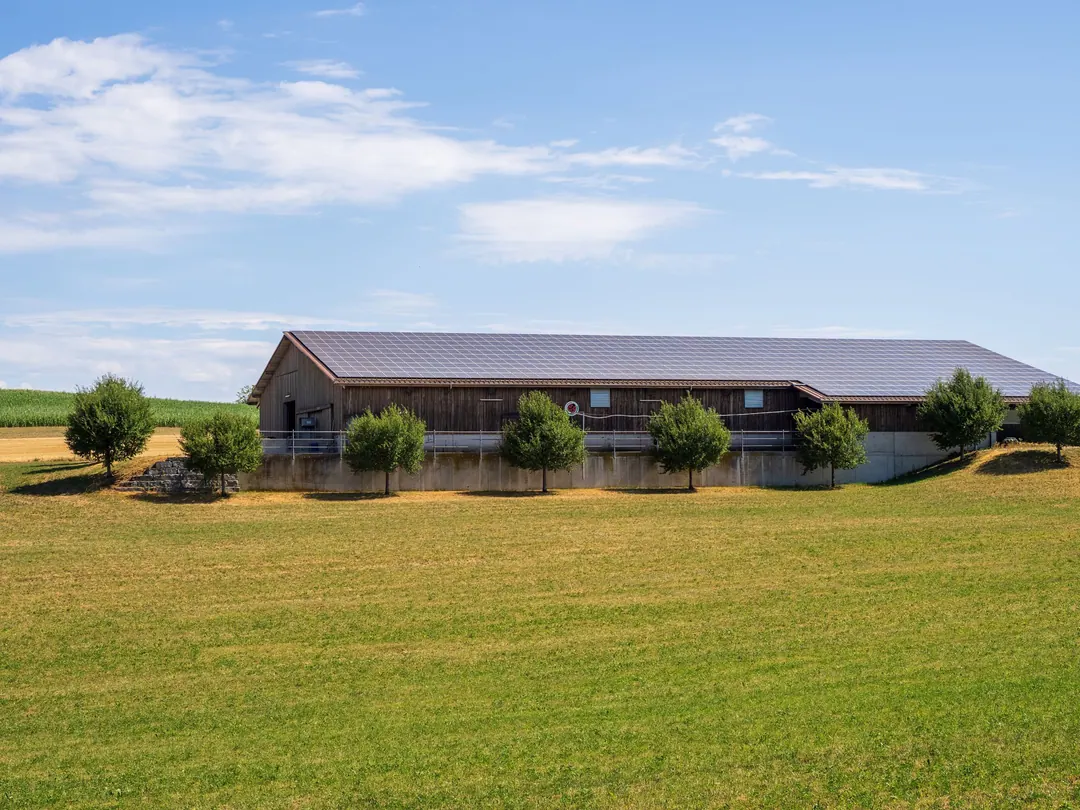
A farm system may need three-phase equipment or more storage than a home, and several SigenStor systems can run in parallel on commercial sites. Our page on solar panels for farms explains how we design around a farm’s daytime load.
How SigenStor stacks the inverter and battery modules
In a SigenStor, the Energy Controller sits on top of the Sigen Battery modules, which stand on a base, so inverter and storage make one column. Sigenergy’s datasheets and installation guides set out how it goes together:
-
One to six modules. Each Energy Controller takes between one and six battery modules.
-
Six on the floor, two on the wall. The guides support up to six modules in a floor-standing stack and up to two on a wall bracket.
-
270 mm per module. Each module is 767 mm wide, 270 mm tall and 265 mm deep, so every module adds 270 mm to the stack. The controller on top is 700 mm wide and 300 mm tall.
-
Heavy lifting. A BAT 6.0 weighs 62 kg and a BAT 10.0 weighs 78 kg, and the guides call for a lift when three or more go on the floor.
-
Fixed at the top. In a floor stack of three to six modules, the controller is also fixed to the wall, at a height worked out from the number of modules.
-
Old and new together. Sigenergy puts a battery optimiser inside each module, so older and newer modules can be mixed.
Planning to add modules later? Tell us at the survey, because the guides ask installers to leave space and cable length for expansion.
What each battery module adds
| Module | Usable energy | Charge and discharge power | Peak power for 10 seconds |
|---|---|---|---|
| SigenStor BAT 6.0 | 5.84 kWh | 3 kW | 4.5 kW |
| SigenStor BAT 10.0 | 8.76 kWh | 4.6 kW | 6.9 kW |
Six BAT 10.0 modules on one controller give 52.56 kWh of usable storage by Sigenergy’s per-module figure. Power counts as well as storage: a single BAT 6.0 is rated at 3 kW, well below the 8,000 W output of an 8.0 SP controller. That’s one reason we size modules and controller together around your electricity use, and our page on solar battery storage explains how we choose capacity.
Ask which inverter suits your home
The Sigen Hybrid route: a battery later
The Sigen Hybrid is the wall-mounted alternative. The single-phase SP2 comes in seven sizes from 2.0 to 6.0 kW and the three-phase TP2 in seven sizes from 3.0 to 12.0 kW. Both are 99 mm deep, the SP2 weighs 11.5 kg and the TP2 19.5 kg, and both accept solar panels rated at up to twice their output.
Adding storage takes one extra part. Sigenergy’s battery datasheet says a SigenStor BC battery controller “must be used if Sigen Hybrid SP2/TP2 is to be connected to the Sigen Battery”, and the BC then takes one to six modules. The BC is 765 mm wide, 109 mm tall and 260 mm deep without its decorative cover, weighing 8 kg. If you already have a Sigen Hybrid, or panels from another maker, our page on adding a battery to the panels you already have explains how we check what fits.
Where a stack can stand in your home
Sigenergy’s guides are specific about where a SigenStor stack may go:
-
Sheltered. Out of direct sunlight, rain, standing water, snow and dust. Where a floor is prone to standing water, the guides call for a waterproofing platform or a wall installation.
-
Away from sea air. At least 500 m from corrosion sources, and the guides name the seaside first. Coastal homes need this checked early.
-
Out of the way. Not where children can easily touch it, and away from the rooms you live and work in, because it makes a sound while it runs.
-
Ventilated. Indoors, the room shouldn’t warm by more than 3 °C while it runs, or the equipment will be derated, meaning its output is reduced.
-
Clear of the car. In a garage, out of the path a vehicle takes.
The battery itself is rated IP66 and works from minus 20 °C to 55 °C. At the survey we look at the options and tell you plainly whether SigenStor suits your home.
Backup, the app and the warranty
Neither inverter keeps the lights on in a power cut by itself. Sigenergy’s 0 ms backup switchover needs the Sigen Energy Gateway working with the inverter and Sigen Battery, tested with the inverter’s nominal power higher than the total power of the home’s loads. Off-grid, both families can supply twice their nominal output for 10 seconds, for appliances that surge as they start, though Sigenergy notes that how well a load starts depends on the appliance. Our Sigenergy Gateway guide covers backup, and our guide to the mySigen app covers following the system from your phone.
Sigenergy’s factory warranties for Europe cover the Energy Controller, the battery modules and the Sigen Hybrid SP2 and TP2 for 10 years. Cover depends on the system staying online: after more than a year disconnected from the internet in total, it drops to 5 years from activation. Our own 10-year workmanship warranty covers the installation work, and every installation includes a year of The Solar Owners Club, with an annual system health check and a dedicated support line. If your system seems to be underperforming, start with the signs it needs a health check.
Choosing the right Sigenergy inverter
The questions that decide which Sigenergy inverter suits a home are practical ones:
- Is your supply single-phase or three-phase?
- How much roof space do you have, and which ways does it face?
- Do you want a battery now, later or not at all?
- Does backup in a power cut matter to you?
- Where could a stack stand, and how close is the coast?
We answer them at a free site survey, design panels and battery together in Easy PV Pro, and fit the system with our own team, as our page on solar panel installation explains. If a Sigenergy inverter isn’t the best fit for your home, we’ll say so.