Advice
Selling a House with Solar Panels: The Paperwork Buyers and Solicitors Ask For
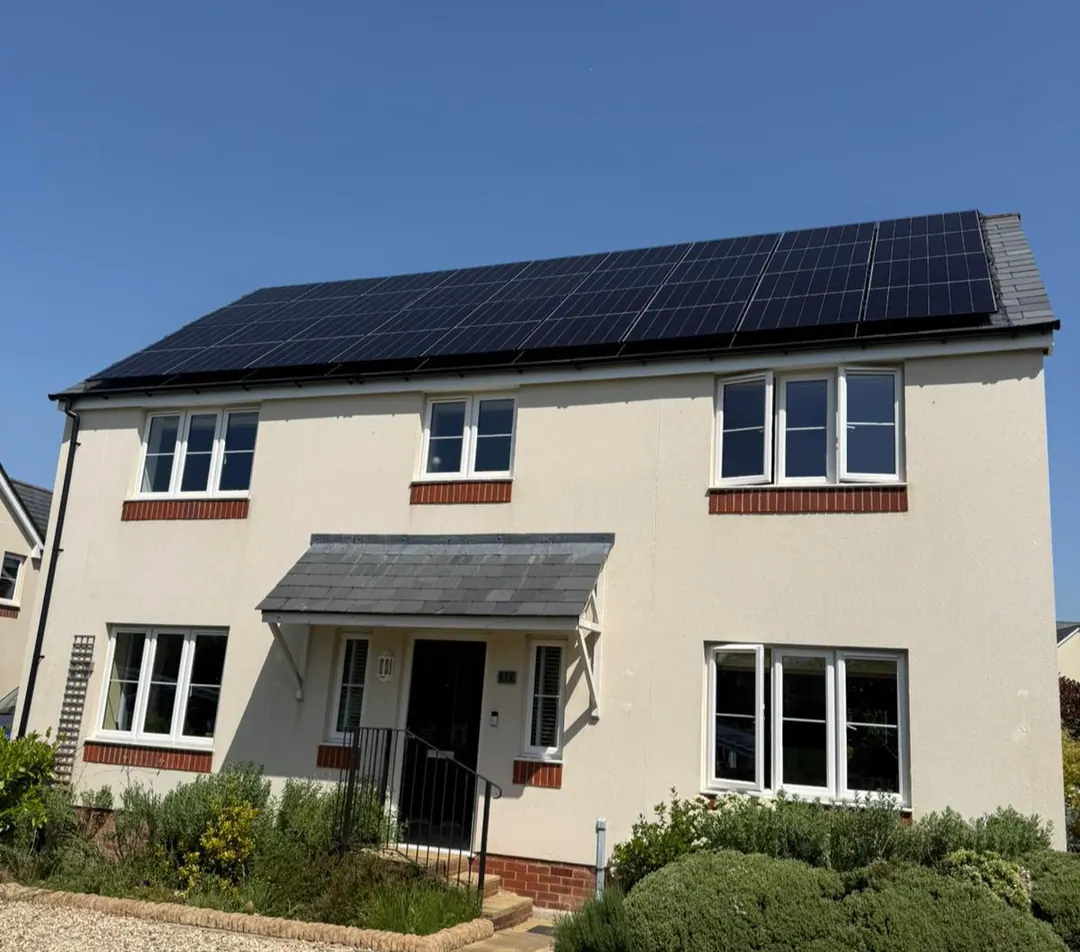
Selling a house with solar panels adds a few questions to the usual ones, and nearly all of them are answered by paperwork. Expect to be asked who owns the panels, whether they were installed and signed off properly, and who receives any payments they earn. This guide covers the documents to gather before you list, how the Feed-in Tariff (FiT) passes to your buyer, export payments, and why leased panels take longest. It’s written for sellers, and it sticks to what Ofgem, MCS and gov.uk say.
Before selling your house: who owns the solar panels?
gov.uk’s guide for sellers says your solicitor will ask you to complete a Property Information Form, known as the TA6, and what you leave behind goes in the contract, often through a TA10 fittings and contents form. First, work out which of these describes your panels.
| Your panels | What to do |
|---|---|
| Bought outright | You own them. Make sure the fittings form and the contract show they’re included in the sale. |
| Leased, often called rent-a-roof | A company owns them under an agreement with you. Find it now, because the buyer’s solicitor will need to read it. |
| Not sure | Check who receives the FiT payments, and the papers from when the panels went up or you bought the house. |
Ofgem points out that the owner of the generating equipment may be different from the owner of the property. In the most common third-party arrangement, it says, the installation owner receives the FiT payments for panels on the roof of a home, while the homeowner typically receives the electricity generated.
The paperwork pack buyers and solicitors ask for
gov.uk’s guide already tells sellers to gather building regulation completion certificates and electrical checks, such as an Electrical Installation Condition Report (EICR). For solar panels, add these:
| Document | What it shows | Where to find a copy |
|---|---|---|
| MCS certificate | The installation was designed and installed to industry-recognised standards | Your installer, then MCS |
| Building Regulations certificate | Notifiable work met Building Regulations | Your installer |
| Network operator notification | The local electricity network operator was told about the system | Your installer |
| Electrical certificate | Any certificate your installer issued for the electrical work | Your installer |
| Warranties | The manufacturers’ product cover, and any installer’s workmanship warranty | Manufacturer, installer |
| FiT papers | Your statement of FIT terms, recent statements and meter readings | Your FiT supplier |
| SEG contract | Who pays for the electricity you export, and on what terms | Your SEG supplier |
| Roof lease | Leased panels only: the agreement with the company that owns them | The panel owner |
You also need an Energy Performance Certificate (EPC). gov.uk says you must order one before you market the house, the seller must show it to buyers, and it’s valid for 10 years. Check the date on yours: if it predates the panels, it was assessed without them.

Your MCS certificate, and replacing a lost one
MCS certification isn’t a legal requirement, MCS says, but the certificate still matters at a sale. A buyer who wants export payments under the Smart Export Guarantee (SEG) will be asked to show that the installation and installer are suitably certified, and Ofgem’s SEG guidance names an MCS certificate as one way to do it.
Lost yours? Ask your original installer first. If the installer is no longer certified by MCS or no longer trading, MCS can issue a copy, but only to the current system owner or their legal representative. You’ll need proof of address, such as a household utility bill less than three months old, and you’ll pay an admin fee. MCS says the copy follows within 10 working days of payment, so ask well before you list.
Building Regulations sign-off and the network operator
Government guidance for owners of solar PV and batteries lists two documents the installer should give you: a Building Regulations Completion Certificate for notifiable work, and a certificate of installation from the installer’s certification scheme, if applicable. Installers registered with a competent person scheme may be able to self-certify. The same guidance says that certificate should be provided when you sell, and gov.uk adds that a scheme-registered installer’s certificate also shows up in solicitors’ searches.
That guidance also says owners must ensure their installer has notified the Distribution Network Operator (DNO). Here it’s National Grid Electricity Distribution (NGED), which serves the South West.
| Route | Which systems | What happens |
|---|---|---|
| G98 | Fully type-tested equipment up to 16 amps per phase | Fit and notify: NGED must be told within 28 days of commissioning |
| G99 | Systems over 16 amps per phase | You may need to apply to NGED before installation |
| G83 | Older systems up to 16 amps per phase | The route before G98 took over on 27 April 2019 |
Ofgem says installers should pass the evidence of notification on to owners, so check your handover pack.
Moving the Feed-in Tariff to your buyer
The FiT closed to new applications from 1 April 2019, but Ofgem says the closure doesn’t affect installations already accredited, and support is paid for each installation’s eligibility period. That right can pass to your buyer. Ofgem’s guidance splits the job:
- You, the seller: tell your FiT supplier, known as the FIT licensee, about the change as soon as reasonably possible.
- Your buyer: contact the FIT licensee with evidence of the change in ownership, so the generator details on the Central FIT Register can be updated. Ofgem gives a copy of the sale and purchase agreement as one example of evidence of ownership.
- The tariff: Ofgem says the eligibility period and tariff rate are not affected when the right to claim FiT payments is transferred.
On completion day, photograph the generation meter with the date showing, ask your supplier whether it needs that reading, then pass on the statement of FIT terms and recent statements. Our Feed-in Tariff guide for existing owners covers rates, readings and end dates.
Export payments under the SEG
If you’re paid for exports under the SEG instead, your contract is with your SEG supplier, the SEG licensee. Ofgem’s guidance says every SEG contract must include a term requiring you to tell the licensee as soon as reasonably possible when ownership of the installation changes. Your buyer can then apply for a SEG tariff with any SEG licensee, and will be asked to show that the installation and installer are suitably certified, which is where the MCS certificate comes in. Our guide to what solar PV is and how export payments work explains the basics.
Warranties, manuals and the monitoring app
Your panels, inverter and any battery carry the manufacturers’ own product warranties, and each manufacturer sets its own terms. Check what each says about a change of owner. An installer’s workmanship warranty is separate again: on systems we install, ours runs for 10 years, covers our installation work and sits alongside the manufacturers’ warranties rather than replacing them.
-
The warranty terms Fox ESS, Sigenergy and EcoFlow publish all shorten cover if a system doesn’t stay connected to the internet, so keep yours online through the sale and tell your buyer why.
-
Pass on the manuals, and the login for the monitoring app, or ask the app’s maker how to move the account across.
-
If you’ve added a battery since the panels went up, its paperwork belongs in the pack too. A buyer weighing one up later can read how we add a battery to an existing solar system.
A health check before the house goes on the market
A buyer may ask whether the system works as it should, and that’s easier to answer with a recent check behind you. Our Annual Solar Health Check is a one-hour visit in which our own team tests and inspects your system, from panel output to the inverter, looking for faults, issues and wear, whoever installed it. On its own it costs £395, and our page on solar panel maintenance sets out what it covers.
Before you book, look for the signs in our guide on how to tell if your solar panels are working, such as daily generation lower than at the same time last year, or red or flashing lights on the inverter. Never climb onto the roof or open the inverter yourself. If something needs fixing, our solar panel repair and fault finding service looks for the cause, whoever fitted the system. Owners of systems we didn’t fit can also ask about joining The Solar Owners Club, which includes an annual system health check, so your buyer can keep the checks going.
Leased panels: the hard case
With rent-a-roof panels, Ofgem says there is likely to be a signed agreement between the homeowner and the installation owner, such as a lease. It also warns that these installations may be sold between companies, especially when companies go out of business, and that the change in ownership may not be communicated to the homeowner. The company named on your paperwork may not own the panels today.
-
Find the agreement, and every letter since about a new owner.
-
Contact the company named in it, and confirm whether it still owns the panels and, if not, who does.
-
Ask the owner what it needs from you and your buyer for the sale, and how long that takes.
-
Give your solicitor copies at the very start, so the buyer’s side has time to read them.
-
Ask your solicitor whether the lease is likely to raise questions for a buyer’s mortgage lender.
FiT solar panels in Exeter
Ofgem’s FiT installation report to 30 June 2026 lists 2,283 solar PV installations in Exeter, 2,160 of them domestic. Most went up in the scheme’s early years:
| Commissioned | Exeter’s FiT solar PV installations |
|---|---|
| 2010 or earlier | 51 |
| 2011 to 2012 | 1,047 |
| 2013 to 2015 | 805 |
| 2016 or later | 380 |
So 1,903 of them are now more than a decade old. When a home with FiT panels it owns is sold, the payments move to the new owner through the steps above. We look after solar at homes around Exeter and across Devon and Cornwall, whoever fitted it.
Your checklist before you list
-
Work out whether you own the panels outright or lease them.
-
Gather the MCS certificate, the Building Regulations certificate, the network operator notification and any electrical certificate.
-
Collect the warranties, manuals and monitoring app details.
-
Find your FiT or SEG paperwork, and plan a dated meter photo for completion day.
-
Check the date on your EPC.
-
Book a health check if the system hasn’t had one recently.
With that pack ready, selling a house with solar panels is much like selling any other: the buyer’s questions come, and you already have the answers.